
VIKINGS: VALHALLA – SEASON 2 (2026)
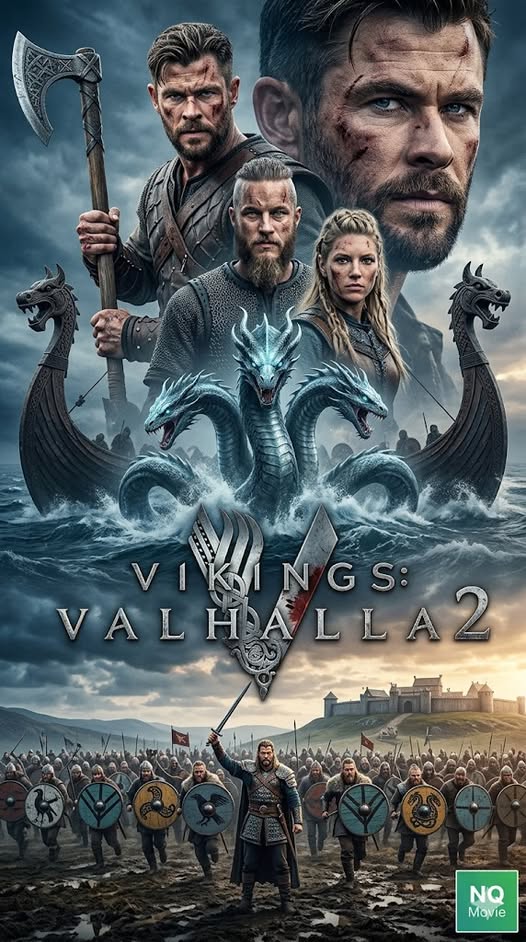
Vikings: Valhalla Season 2 continues the epic historical drama set in the Viking Age, following the journeys of Leif Eriksson, Freydis Eiríksdóttir, and Harald Sigurdsson as their destinies push them further across Europe after the fall of Kattegat.
This season expands the world significantly, taking the characters away from Scandinavia and into new regions like Novgorod, Jomsborg, and England. The storytelling becomes more fragmented, as each main character follows a separate path, dealing with personal goals, political struggles, and survival in unfamiliar lands. This wider scope gives the series more variety, but also makes the overall narrative feel less tightly connected than Season 1.
Leif’s journey focuses on grief, exploration, and self-discovery as he travels east and begins forming new alliances. Harald continues his ambition to claim power and become King of Norway, pushing his military and political limits. Freydis, meanwhile, becomes deeply involved in spiritual leadership and the faith of her people, which gives her storyline a more symbolic and cultural direction.
One of the strongest aspects of Season 2 is its character development. The series takes more time to explore emotional depth, especially in quieter moments where characters reflect on loss, ambition, and identity. However, this comes at the cost of pacing. Several critics and viewers noted that the season feels slower and sometimes scattered, with storylines separated across different locations that don’t always intersect smoothly.
The action sequences remain a highlight. Battles are intense, visually strong, and grounded in the brutal realism that defines the franchise. These moments help maintain excitement even when the political and character-driven parts slow down.
However, some viewers felt the season lacked the consistent intensity of the first season. The split storylines and slower buildup made parts of the narrative feel less focused, even though the character arcs themselves remained interesting and meaningful.
Overall, Season 2 is best described as a transitional season. It deepens the world, expands the mythology, and develops the main characters further, but it also sacrifices some narrative momentum in exchange for broader storytelling ambitions.
It sets the stage for future conflicts while exploring how each character’s path is moving further away from the others, both physically and emotionally.