God of War (2026)
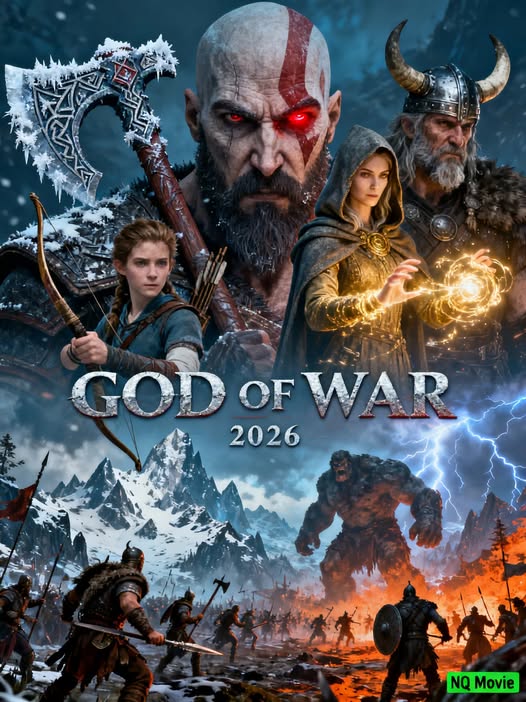
God of War (2026) is widely discussed online as a live-action adaptation of the legendary video game franchise, but most trailers circulating are fan-made concepts, not official footage. 
God of War (2026) is widely discussed online as a live-action adaptation of the legendary video game franchise, but most trailers circulating are fan-made concepts, not official footage.
The real project is a high-budget television series based on the modern era of the franchise, particularly the 2018 game and its sequel Ragnarök. It aims to translate one of gaming’s most emotionally driven stories into a cinematic format, focusing on Kratos, a former god of war, and his son Atreus.
Story and Narrative Direction
The adaptation centers on Kratos’ journey through a mythological world inspired by Norse legends. After leaving behind his violent past, he attempts to live a quieter life while raising Atreus. However, their journey to fulfill a personal mission quickly evolves into a larger conflict involving gods, fate, and identity.
Unlike traditional action-heavy adaptations, the story is deeply character-driven. The relationship between father and son forms the emotional core, exploring themes of restraint, legacy, and the struggle to break cycles of violence. This approach reflects the tone of the newer games rather than the more brutal Greek-era storyline.
Tone and Themes
The tone is expected to be serious, grounded, and emotionally intense. While the God of War franchise is known for large-scale battles and mythological spectacle, the modern narrative focuses more on internal conflict and personal growth.
Themes of fatherhood, redemption, and identity are central. Kratos is no longer just a warrior; he is a man haunted by his past, trying to guide his son without repeating his own mistakes. This emotional depth is what distinguishes the adaptation from typical fantasy action series.
Characters and Performances
The series stars Ryan Hurst as Kratos and Callum Vinson as Atreus. Early casting announcements also include major mythological figures such as Odin, Thor, and Baldur, indicating a strong focus on Norse mythology.
Kratos is portrayed as physically imposing yet emotionally restrained, while Atreus brings curiosity and vulnerability. Their dynamic is expected to carry the series, providing both tension and emotional resonance.
Visual Style and World-Building
The adaptation is designed to be visually ambitious, with large-scale environments, mythological creatures, and cinematic action sequences. Filming began in 2026, with significant investment in production design and visual effects to match the scale of the games.
However, early reactions to first-look images have been mixed, with some viewers questioning whether the live-action version can fully capture the intensity and style of the original games.
Pacing and Expectations
As a television series, the pacing is expected to be slower and more detailed than a film. This allows for deeper character development and exploration of the world, but it also raises concerns about maintaining momentum across episodes.
The decision to expand the story into multiple seasons suggests a long-term narrative plan rather than a single, self-contained story.