Mortal Kombat II (2026)
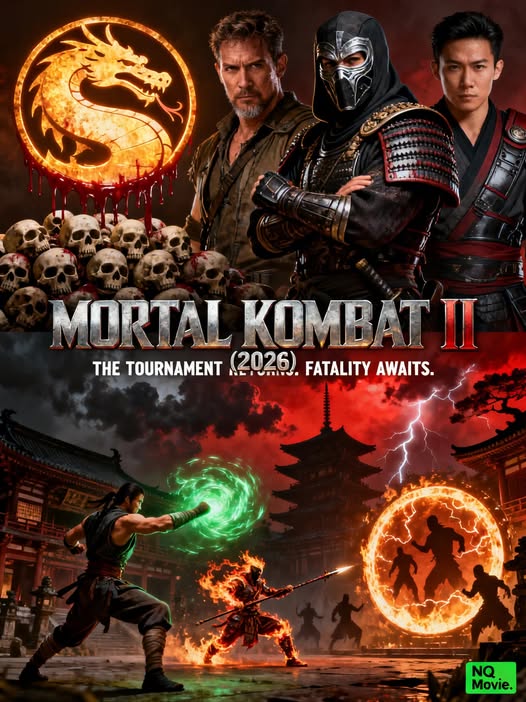
“Mortal Kombat II (2026)” continues the brutal, high-energy legacy of the franchise, expanding far beyond the foundation laid by the 2021 reboot. Directed by Simon McQuoid, this sequel embraces what fans have been waiting for—the actual tournament, where Earthrealm’s champions must face the full power of Outworld under the rule of Shao Kahn.
From the very beginning, the film feels larger in scale and more confident in its identity. Unlike the previous installment, which focused heavily on setup and character introductions, this sequel dives straight into conflict. The stakes are no longer personal—they are existential. Earthrealm itself hangs in the balance as the tournament unfolds, bringing a constant sense of urgency to the narrative.
The story centers on a full-scale war between realms. With Shao Kahn emerging as the primary threat, the film introduces a more structured and intense version of the Mortal Kombat tournament. The inclusion of multiple realms—Earthrealm, Outworld, and Edenia—adds depth to the world-building, making the universe feel more interconnected and expansive.
One of the most notable additions is Johnny Cage, played by Karl Urban. His character brings a different energy to the film—a mix of arrogance, humor, and unexpected vulnerability. Rather than being just comic relief, this version of Johnny Cage is portrayed as someone struggling with his identity and relevance, which adds an emotional layer to the otherwise action-heavy narrative.
Returning characters like Liu Kang, Sonya Blade, and Jax are given more purpose this time. Liu Kang, in particular, steps into a leadership role, guiding Earthrealm’s fighters and embracing his destiny. However, despite the larger cast, not every character receives equal attention. Some fighters feel underutilized, appearing mainly during fight sequences without much development.
Visually, the film is a major step up. The fight choreography is more refined, brutal, and faithful to the video game roots. The battles are faster, more violent, and more creative, fully embracing the franchise’s signature gore and intensity. The R-rating is clearly justified, with the film leaning heavily into graphic combat and iconic finishing moves.
The environments are also more diverse, ranging from dark, war-torn landscapes to grand, stylized arenas. This variety helps keep the film visually engaging, though at times the heavy use of CGI can feel overwhelming. Some action scenes become chaotic, sacrificing clarity for spectacle.
Thematically, “Mortal Kombat II” explores ideas of destiny, honor, and sacrifice. The tournament is not just about winning—it is about proving worth, defending one’s realm, and confronting inner fears. However, these themes are often overshadowed by the relentless pace of the action. The film rarely slows down long enough to fully explore its emotional depth.