SCARED TO DEATH (2026)
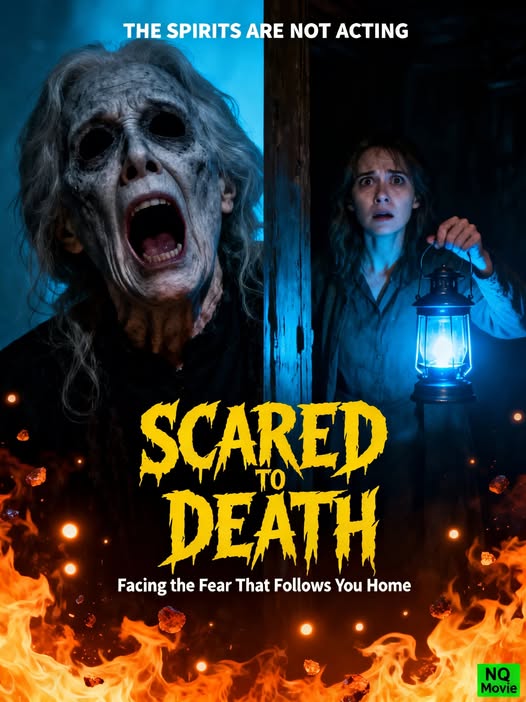
“Scared to Death (2026)” is a horror-comedy that blends supernatural terror with a self-aware, slightly playful tone. Directed by Paul Boyd, the film follows a group of filmmakers who decide to experience a real séance inside an abandoned children’s shelter as research for their movie. What begins as a creative experiment quickly turns into a nightmare when they become trapped and are forced to confront a dark, lingering presence tied to the building’s tragic past.
The story leans heavily into a classic horror setup—haunted location, restless spirits, and a group of people who clearly shouldn’t have gone there in the first place. However, the film adds a meta layer by making the characters filmmakers themselves. This creates an interesting dynamic where they initially treat everything as performance or material, only to slowly realize that the horror is real. The idea that “believing is seeing” becomes central, blurring the line between imagination and reality.
In terms of pacing, the film starts off relatively light, even humorous at times, as the characters joke and interact like a dysfunctional production crew. But once the séance begins, the tone shifts into something darker and more intense. The transition is effective in concept, though not always perfectly executed. Some scenes build strong tension, while others feel rushed or overly reliant on familiar horror tropes.
The performances are one of the stronger aspects of the film. Veteran horror actors like Lin Shaye and Bill Moseley bring credibility and presence, helping ground the more chaotic elements of the story. The rest of the cast delivers decent performances, though their characters are not deeply developed. Many of them fall into recognizable archetypes, which makes it harder to feel emotionally invested when things start to go wrong.
Visually, the film makes good use of its primary setting—the abandoned orphanage. The atmosphere is eerie and oppressive, with dim lighting, narrow hallways, and decaying interiors contributing to a constant sense of unease. The supernatural elements, particularly the spirits of the children, are unsettling without being overly graphic. The horror relies more on tension and atmosphere than explicit shock value, which works in its favor.
One of the more interesting aspects of the film is its thematic focus on fear itself. The idea that fear can manifest reality or give power to unseen forces adds a psychological layer to the story. The haunting is not just about ghosts, but about how the characters’ own beliefs, guilt, and ambitions contribute to their downfall. This gives the film a slightly deeper edge compared to standard haunted house stories.