U.S. Destroys 16 Iranian Mine-Laying Boats as Tehran Threatens to Block Gulf Oil Exports
Strait of Hormuz Emerges as Major Flashpoint in Expanding Middle East Conflict
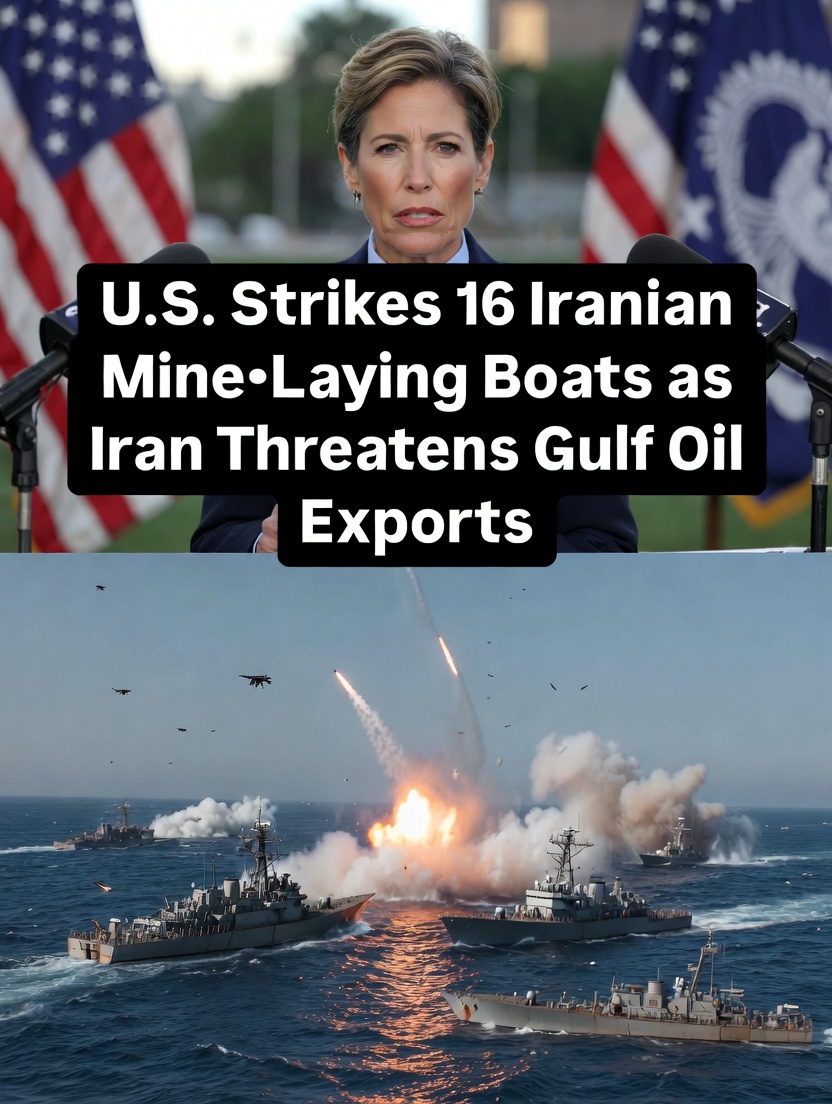
Strait of Hormuz — The United States military says it has destroyed 16 Iranian vessels believed to be capable of laying naval mines near the strategically vital Strait of Hormuz, in a move aimed at preventing Iran from disrupting one of the world’s most important energy shipping routes.
According to U.S. officials, the operation targeted boats suspected of preparing to deploy mines in the narrow waterway. Such mines could pose a serious threat to commercial tankers and military vessels navigating the area, potentially halting or severely disrupting maritime traffic.
The action comes shortly after Iranian leaders warned they could block oil exports through the Strait of Hormuz, declaring that shipments would be stopped “even a single liter” to countries considered hostile if the conflict continues to escalate. The statement has intensified concerns that the confrontation could directly impact global energy supplies.
The Strait of Hormuz is widely regarded as one of the most critical chokepoints in global trade. Roughly 20 percent of the world’s oil supply passes through the narrow corridor connecting the Persian Gulf to international waters. Any attempt to block or mine the route could rapidly trigger major disruptions in global energy markets.
Energy analysts warn that even the threat of closure can drive market volatility. Oil traders have already been reacting to heightened tensions in the region, with prices fluctuating as investors weigh the risks of supply disruptions and expanded military conflict.
Military experts say the destruction of the Iranian vessels signals a determination by the United States and its allies to keep the shipping lanes open. However, they caution that the confrontation at sea could escalate quickly if Iran attempts further actions against tankers, ports, or offshore infrastructure.
The naval standoff in the Strait of Hormuz comes amid a broader regional escalation that has included airstrikes in Lebanon, attacks on Gulf energy infrastructure, and rising diplomatic tensions at the United Nations. As the conflict spreads across multiple fronts, the safety of global shipping lanes and energy supplies has become one of the most pressing international concerns.
With both sides signaling readiness to continue operations, analysts warn that the coming days could prove critical for the stability of global oil markets and the security of one of the world’s most important maritime corridors.