Iran-Linked Strike Hits Fuel Tanks in Bahrain’s Muharraq Amid Regional Tensions
Attack Raises Concerns Over Gulf Energy Security as Conflict Escalates
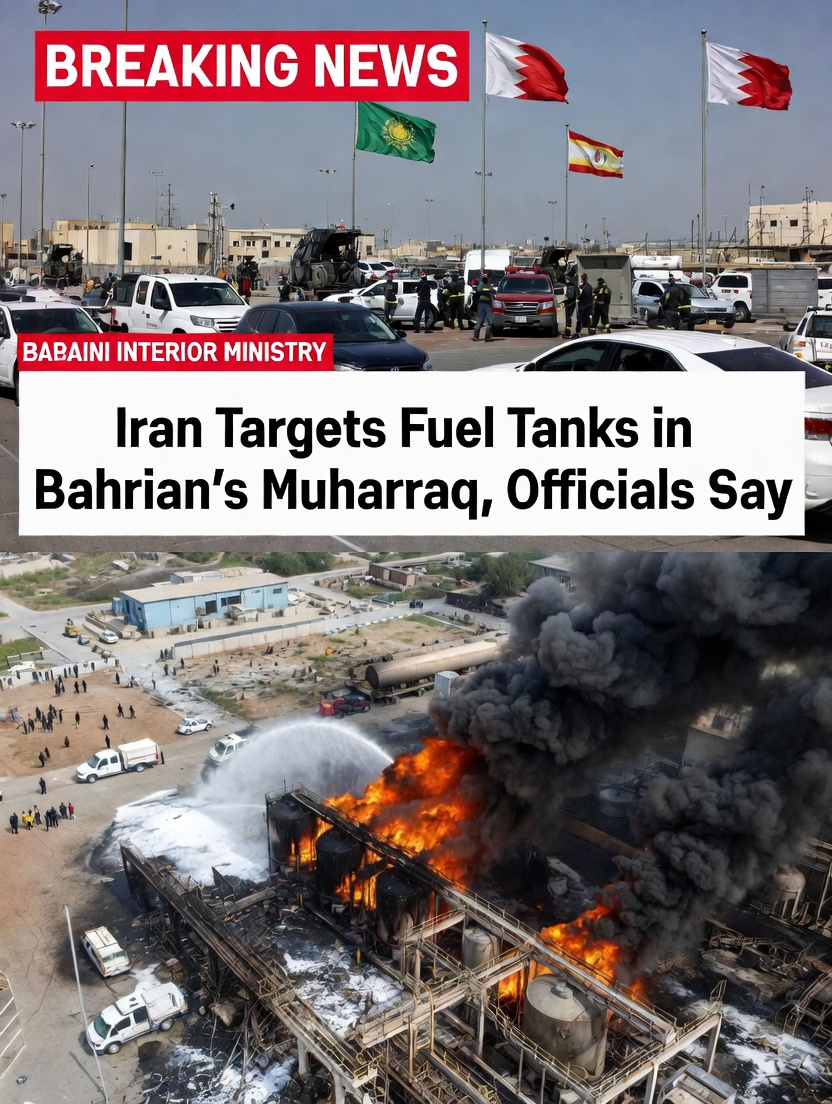
Muharraq, Bahrain — Fuel storage tanks at a facility in Bahrain’s Muharraq governorate were struck in an attack officials believe is linked to Iran, local authorities reported. The Interior Ministry confirmed that emergency procedures are underway to secure the site and ensure public safety.
The attack comes amid a wave of recent strikes on Gulf energy infrastructure, including facilities such as water plants, airports, and shipping routes, as tensions between Iran, the United States, and regional allies continue to rise. While the extent of the damage to the Muharraq facility has not yet been fully assessed, authorities say no casualties have been reported so far.
Security experts warn that such attacks on critical infrastructure could have far-reaching consequences, potentially disrupting fuel supply chains across the Gulf and further destabilizing international energy markets already affected by the ongoing Middle East conflict.
The Muharraq strike follows a series of escalating incidents, including drone attacks on Dubai towers, Israeli airstrikes in Beirut, and mine-laying threats in the Strait of Hormuz, signaling a widening theater of conflict that now increasingly targets civilian and economic assets in addition to military installations.
Analysts say that attacks like this not only heighten regional security risks but also increase the likelihood of retaliatory measures by affected countries, potentially drawing more nations into the ongoing confrontation. The incident underscores growing international concern about the safety and reliability of energy infrastructure in the Gulf as the conflict intensifies.
Authorities in Bahrain have urged residents to remain vigilant while the situation is being monitored, with precautionary measures in place to prevent further incidents. The attack adds another dimension to the already complex security landscape in the Gulf, where strategic energy assets continue to be a key focal point in the escalating U.S.–Iran conflict.