Iran Warns of Possible “Toxic Rain” in Tehran After Oil Depot Strikes
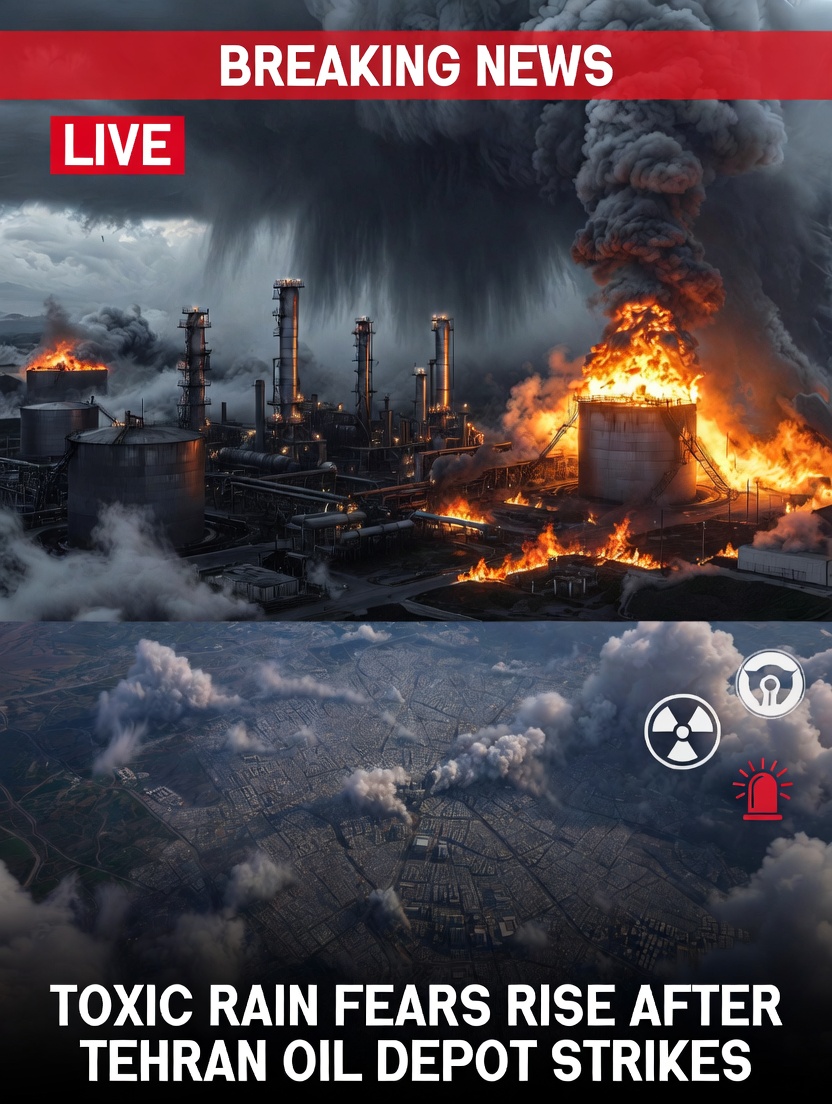
Authorities in Iran have issued a public warning about the possibility of “toxic rain” in the capital following recent strikes that ignited major oil storage facilities. The alert was released on March 8 by the Iranian Red Crescent Society after several petroleum depots in Tehran were hit during military attacks linked to the escalating confrontation with Israel.
Officials say large oil fires and the release of chemicals into the atmosphere may create dangerous environmental conditions if rain falls over the affected areas.
Oil Fires Release Hazardous Chemicals
According to emergency authorities, explosions at the targeted oil storage sites sent large amounts of smoke, fuel vapors, and chemical particles into the air. Experts warn that these pollutants could mix with rain clouds and fall back to the ground in contaminated precipitation.
Officials cautioned that such rainfall could potentially cause chemical burns on exposed skin, irritate the eyes, and damage the lungs if inhaled, especially for people who remain outdoors during rainfall.
Environmental specialists say oil fires can release a wide range of toxic substances, including hydrocarbons and other combustion byproducts, which may pose health risks when dispersed in the atmosphere.
Residents Advised to Avoid Rain Exposure
In response to the potential threat, emergency authorities urged residents to avoid going outside if rainfall occurs. The warning emphasized that people should remain indoors whenever possible until environmental conditions improve.
If individuals are caught outdoors during rainfall, officials recommend immediately seeking shelter under solid structures such as concrete or metal roofs. Residents were also advised not to stand under trees, which may not provide effective protection from contaminated rainwater.
Health guidance issued by authorities includes several precautionary steps if contact with rainwater occurs:
-
Rinse the skin continuously with cold running water
-
Remove and change wet clothing immediately
-
Seal contaminated clothing in a plastic bag to prevent further exposure
These measures are intended to reduce the risk of chemical irritation and limit prolonged contact with potentially hazardous substances.
Fuel Supply Restrictions Introduced
At the same time, authorities in Tehran have introduced temporary fuel restrictions as the city deals with the aftermath of the strikes and fires.
Local officials announced that the daily fuel allowance for residents has been reduced from 30 liters to 20 liters per day. The measure is designed to manage fuel supplies while damage to storage and transport infrastructure is assessed.
Officials emphasized that the restriction is temporary and could be lifted within two to three days once the situation stabilizes and fuel distribution systems return to normal.
Growing Environmental Concerns
The warning highlights the environmental dangers that can arise when military strikes hit energy infrastructure located near major urban centers. Fires involving oil storage facilities can burn for extended periods and release large quantities of pollutants into the air.
Environmental experts note that beyond the immediate fire hazards, smoke and chemical residues may linger in the atmosphere and contribute to air and water contamination.
For residents of Tehran, the warning about possible toxic rainfall has added another layer of concern to an already tense situation as the conflict continues to affect daily life across the region.
Authorities say monitoring of air quality and weather conditions will continue, and additional safety instructions may be issued if environmental risks increase.