Airstrikes Hit Iranian Oil Facilities as ‘River of Fire’ Reported in Tehran
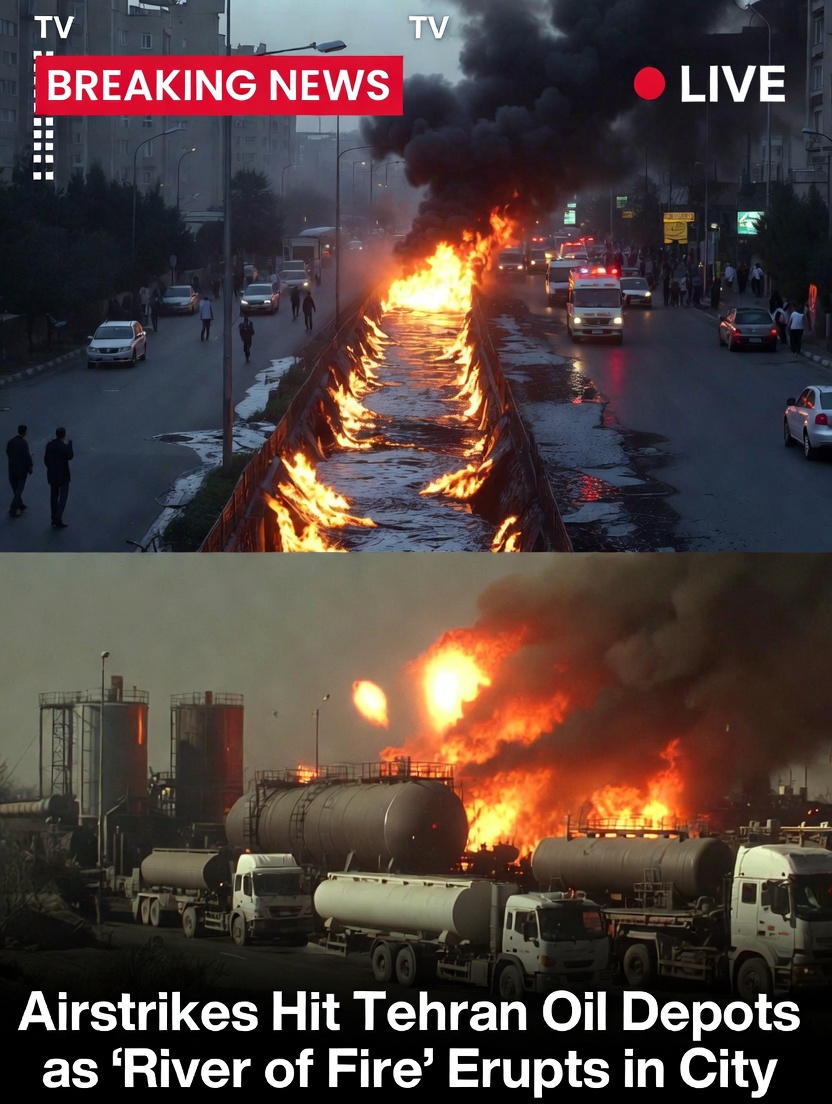
The conflict involving Iran, Israel, and the United States escalated further on March 8 after reports that U.S. and Israeli airstrikes targeted multiple oil facilities in and around the Iranian capital, triggering fires and dramatic scenes across parts of the city.
According to Iranian officials, the overnight strikes hit four oil storage depots and a petroleum transport center located in Tehran and nearby areas of Alborz Province. The attacks reportedly killed four workers, including two fuel truck drivers who were present at the site during the bombardment.
Oil Facilities Damaged in Coordinated Strikes
Authorities said the targeted installations suffered structural damage following the airstrikes. Emergency crews were quickly deployed to contain large fires that erupted at several of the facilities after explosions shook the area.
Officials later reported that firefighters managed to bring the flames under control, preventing the fires from spreading further into surrounding industrial zones.
However, the strikes created an unexpected secondary danger when large quantities of leaking petroleum flowed into the city’s drainage system.
Witnesses Describe “River of Fire”
According to local reports and eyewitness accounts, oil that had leaked from the damaged storage facilities entered Tehran’s drainage channels and eventually ignited, producing dramatic scenes that witnesses described as a “river of fire” moving through parts of the city.
Videos circulating on social media appear to show long streams of flames burning along sections of roads and drainage lines, illuminating nearby streets with intense orange light.
Emergency responders reportedly worked throughout the night to isolate the burning fuel and prevent the fire from spreading to residential areas or nearby buildings.
While authorities have not yet confirmed the full extent of the damage, the incident raised concerns about the risks posed by attacks on energy infrastructure located close to major urban areas.
Israel Signals Escalation in Energy Targeting
Following the strikes, Eli Cohen, Israel’s energy minister, said the attacks on Iranian oil infrastructure represent a significant escalation in the ongoing war.
Cohen stated that Israel intends to continue targeting facilities that could weaken Iran’s government and reduce its ability to sustain military operations.
According to the minister, Israel has developed a clear operational plan and timeline for the conflict, suggesting that further strikes on strategic infrastructure could occur in the coming weeks.
Strategic Impact of Energy Infrastructure Attacks
Oil depots and transport facilities play a crucial role in Iran’s economy and logistics network. Targeting such infrastructure could disrupt fuel distribution, affect industrial production, and reduce the country’s capacity to support military operations.
Energy analysts warn that repeated strikes on petroleum storage and transport sites could also increase environmental and safety risks, particularly in densely populated areas like Tehran.
Additionally, attacks on oil infrastructure often have global consequences. Iran remains a significant energy producer in the region, and damage to its facilities could affect regional oil supplies and influence international energy markets.
Rising Fears of Wider Conflict
The latest strikes come amid a rapidly intensifying confrontation between Iran and Israel that has already included airstrikes, missile attacks, drone launches, and strikes on military and industrial targets across multiple locations.
Security experts warn that each new escalation increases the risk of the conflict expanding beyond the two countries involved. Several Middle Eastern nations are closely monitoring the situation as military operations grow more aggressive.
For residents in Tehran, the dramatic fires and explosions serve as a visible reminder of how quickly the conflict is moving closer to civilian areas.
As both sides continue to exchange strikes, analysts fear that the situation could soon evolve into a much broader regional crisis if diplomatic efforts fail to slow the escalation.