Advanced U.S. Weapons Deployed in Strikes on Iran
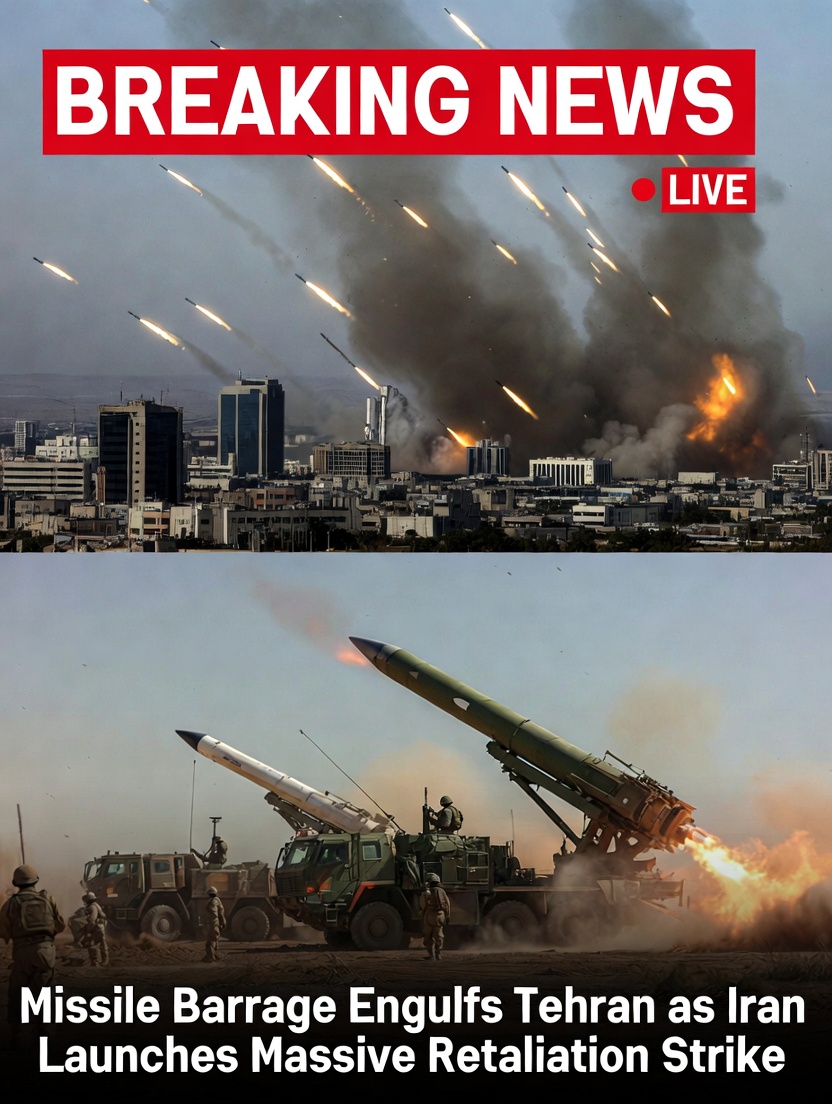
Before launching military strikes against Iran together with Israel, the United States deployed one of its largest military buildups in the Middle East in decades, including some of its most powerful weapons systems.
U.S. President Donald Trump repeatedly warned that American forces were “ready for combat.” On February 28, those warnings became reality when U.S. and allied forces launched attacks on Iranian targets.
According to CNN, the United States Central Command (CENTCOM) released details on March 1 about the advanced weapons used in the operation, known as “Operation Fierce Fury.”
B-2 Stealth Bombers
Northrop B-2 Spirit bombers played a major role in the attacks.
The bat-wing shaped aircraft, which costs more than $1 billion per unit, is one of the most powerful aircraft in the U.S. Air Force. Equipped with four jet engines, the B-2 can carry both conventional and nuclear weapons, has intercontinental range, and can be refueled in mid-air.
With a crew of just two pilots, B-2 bombers usually depart from Whiteman Air Force Base.
In a previous mission in 2025, seven of the U.S. Air Force’s nineteen B-2 bombers carried out a 34-hour round-trip strike targeting Iranian nuclear-related facilities.
During the current operation, CENTCOM said B-2 bombers used 907-kilogram precision bombs to strike Iranian ballistic-missile facilities.
LUCAS One-Way Attack Drones
CENTCOM also confirmed that the operation marked the first combat use of the LUCAS one-way attack drone system.
LUCAS — short for Low-Cost Unmanned Combat Attack System — was deployed by the Task Force Scorpion Strike (TFSS) unit, which was activated in the Middle East last year.
According to the U.S. military, the system was designed to provide low-cost but effective drone strike capability to support troops in combat.
The drone design is partly inspired by the Shahed-136, an Iranian drone widely used by Russia during the war in Ukraine.
Aircraft Carriers and Naval Forces
The U.S. Navy also deployed powerful naval assets to support the strikes.
Two major aircraft carriers were positioned in the region:
USS Abraham Lincoln (CVN-72) in the Arabian Sea
USS Gerald R. Ford (CVN-78) in the Mediterranean Sea near Israel
CENTCOM released video footage showing F/A-18 and F-35 fighter jets taking off and landing from the USS Abraham Lincoln during the operation.
The USS Gerald R. Ford carrier group is also operating in the region, though it does not currently carry F-35 fighter jets.
Disputed Missile Strike Claim
Iran’s Islamic Revolutionary Guard Corps (IRGC) claimed that it had launched a ballistic missile strike that hit the USS Abraham Lincoln aircraft carrier.
However, CENTCOM strongly rejected the claim. In a statement posted on social media on March 1, the command described the report as “false information.”
Rising Tensions
The deployment of advanced aircraft, drones, and naval forces highlights the scale of the current conflict.
Military analysts warn that the use of such powerful weapons systems signals a serious escalation that could widen the conflict across the Middle East.