
Rarely does such a powerful, blockbuster winter storm nearly sneak up on the most populous urban corridor in the US. But that’s what happened this weekend.
As of Friday, forecast models still disagreed on whether the Northeast blizzard would be a blockbuster for the Mid-Atlantic and Northeast. It wasn’t until Saturday morning that the models really started to align on it being of potentially historic magnitude — and even then, there was still far more uncertainty than normal.
From that time onward, meteorologists were hammering on the forecast, increasing snowfall totals, wind speeds and the overall threat level to make sure people knew the seriousness of what was coming in less than 48 hours.
Although the end result is likely to be fewer deaths and injuries than might have occurred had officials not been on top of the situation, declaring state of emergencies and taking other escalatory steps, the fact is that the forecast left a lot to be desired in terms of accuracy in advance.
Forecasters were also fighting an uphill battle. Social science research has shown that people tend to cling to the first forecast they hear for a storm, even after it changes. This can occasionally prove deadly, as in the case of Hurricane Ian in 2022, when some Floridians did not flee areas that were especially threatened by the storm’s shifting track.
In this case, the first forecast people heard in the Northeast was that the storm would likely miss their area, but with the caveat that they should keep attuned to the latest forecasts, in case things were to change.
And yikes, the details sure did change.


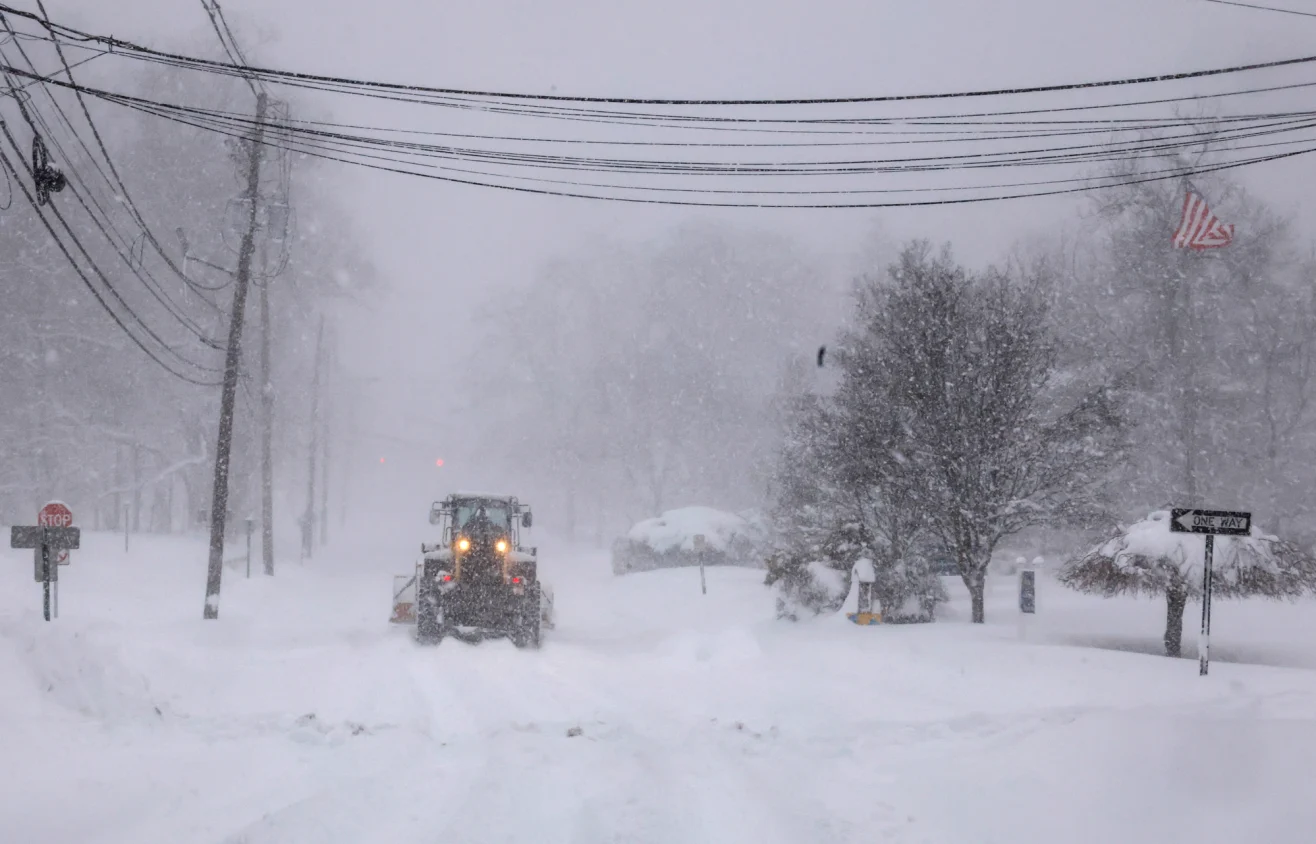
In many ways, the forecast chaos was equivalent to another familiar situation: when a hurricane rapidly intensifies as it approaches land, catching people off guard who may have prepared for a weaker storm. The storm itself was also similar to a hurricane, with winds gusting up to 84 mph, snow piling higher than two feet in some spots, and blizzard conditions from the Delmarva to Boston.
Rapidly changing forecasts present unique challenges for forecasters, weather communicators and public officials alike. Instead of having several days to get used to the complexities of a forecast and prepare the public, governors and mayors only had about two days to message the increasing seriousness of this event.
They seemed to have succeeded in doing so, with airlines canceling thousands of flights in advance of the wintry onslaught, city and state travel bans going into effect prior to the arrival of the worst conditions and other steps taken to ensure the public’s safety during this event.
It could have been a lot worse, given the scenario: a rapidly changing forecast, a historically intense storm taking a textbook-perfect track to slam the I-95 corridor and increasingly urgent public safety messaging.
Winter and even hurricane history is replete with bungled responses in cities like New York, where former Mayor Michael Bloomberg famously dismissed the threat posed by Superstorm Sandy once it was no longer formally referred to as a hurricane.
Snowstorms can make or break a mayor’s career, and in New York City, newly crowned mayor Zohran Mamdani sought to get ahead of this one and clearly communicate the dire threat it posed to public safety. This storm was also an early test of newly sworn in governors in Virginia and New Jersey.

There are many sound scientific reasons for the enduring forecast uncertainty in this situation, including opposing computer model projections in the context of a complex weather pattern.
But with all the tools available to forecasters today, including the advent of AI-driven computer models, one would hope this storm’s last-minute forecasting proves to be a rarity, not the rule.
Because in hindsight, there was a lot of luck that played into the public’s preparations for this storm, with forecasters in the uncomfortable position of rapidly ratcheting up their warnings with precious little preparation time to spare.