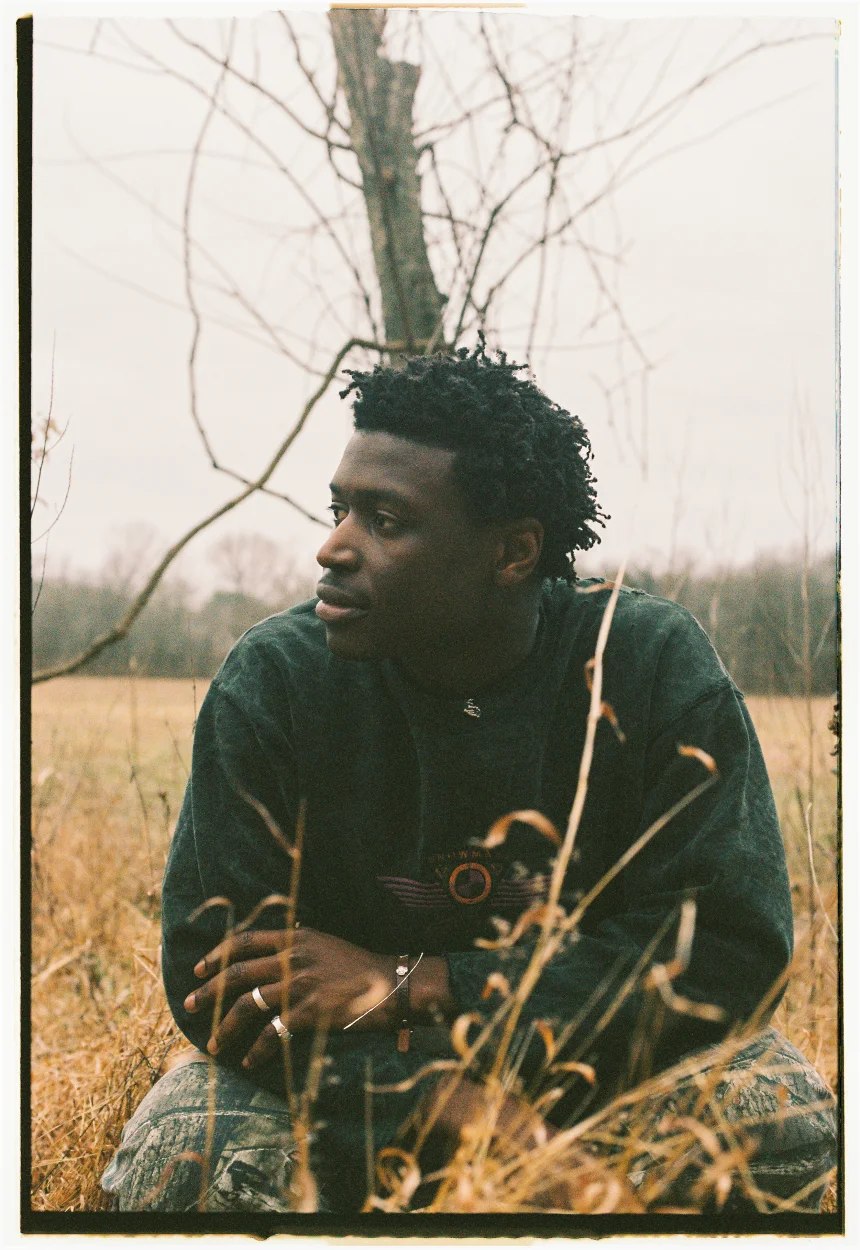
Never heard of Afro-Appalachia? This singer-songwriter is out to change that
Nominated for a record-breaking 16 Oscars, Ryan Coogler’s “Sinners” follows Sammie, the son of a preacher whose transcendent voice and Dobro guitar lead him on a journey through vampiric invasion into life as a successful modern American musician.
The film opens with a narration that references the “griots”: centuries-old West African storytellers who transmit oral history via the medium of poetry and song. In Tennessee, strumming through the foothills of the Appalachian Mountains, a griot for the present age is emerging.
Born in war-torn Liberia but raised in the United States, singer-songwriter Mon Rovîa, real name Janjay Lowe, is out to channel the spirit of those mythic storytellers.
“This is why this movie was so powerful. You see the magic carried in the boy who sings with the voice of his ancestors,” he told CNN. “They give him this energy, this gift, to help his people along the way.
“It’s interesting because the griots come specifically from West Africa, where I’m from … maybe that’s also my role now, to carry those stories, whether it be of America’s history or even my own.”
The story of Lowe, who takes his stage name from the Liberian capital, is one that shares some overlap with that of “Sinners” protagonist Sammie, albeit featuring a ukulele, not a guitar, and minus any garlic-fearing bloodthirsty monsters.
Born during the first of Liberia’s two Civil Wars, conflicts that claimed more than 200,000 lives between 1989 and 2003, Lowe was adopted at 7 years old by American Christian missionaries around the turn of the millennium.
Having relocated with the family across various states, from Florida to Montana, it wasn’t until he settled in the mountain-cradled city of Chattanooga, where he now resides, that he picked up the instrument that today seems an extension of his own arms.
In fact, and much to his team’s amusement, growing up Lowe barely listened to any music at all outside of church hymns. That eventually changed — his eardrums filled with the folk-inspired sounds of Mumford and Sons, Bon Iver, and Adrianne Lenker — but those remnants of spirituality remain intertwined in his “Afro-Appalachian” music, even if he himself is not particularly religious.
“That wrestling of trying to understand the bigger forces at play in the human experience and the search for identity and belonging is super important,” Lowe said.
“Spirituality, I think, lends its hand to guide you along that path to finding where you belong and what your purpose is in life.”
The road to finding that purpose has been, in the words of his most streamed song, crooked.
Lowe has not shirked from harmonizing the struggles that have shaped him, be it a near-death experience in the face of Liberian child soldiers (“Day at the soccer fields”), depression (“Cleopatra”), grief (“Damn These Forces”) or a life away from his biological family (“Whose Face Am I?”) that “tore” at his sense of self.
“I didn’t feel like I could claim my Liberian heritage or the culture … It took a while,” said Lowe, who has not been back to his birth country since a trip with his father around the age of 11.
“In the music, you feel that — the struggle to claim an identity that was lost, but also the hope that those things can be reclaimed again.”
Though Appalachian folk music is commonly associated with white artists like the Carter Family, the “Mother of Folk” Jean Ritchie and Dolly Parton, African Americans have contributed significantly to the Southern Appalachian sound but are “often overlooked” in the genre’s local history, according to the National Park Service, writing about the Great Smoky Mountains.
As early as the 16th century, when West Africans arrived from across the North Atlantic as slaves, their use of gourds (hard-shelled fruits) as instruments paved the way for the eventual emergence of the banjo, which became a staple of Appalachian folk.
Showcasing vulnerability has helped endear Mon Rovîa to an ever-expanding online fanbase, closing in on 1 million TikTok followers — many of them from Liberia.
His most viral post, watched over 4.8 million times, invites viewers to lose themselves in “songs that sound like lullabies for adults.” It hints at the unassuming power of the ukulele to, like the griots of old, send listeners into a trance-like state.
That state, Lowe hopes, is a sanctuary for people to sit with whatever troubles worry them.
“It gives a place for people to not feel the loudness. A safe space, where all their emotions, even if it’s with the times and things that are going on in the world, are not clouded by noise,” he explains.
“It’s them and their thoughts, and it’s a safe space for them to feel those things and also be seen in those things. That’s what I probably mean by a lullaby.”
What’s going on in the world is of paramount importance to Lowe, who has used his platform to discuss global issues, such as the recent protests in Iran.
On his 2025 single “Heavy Foot,” which some have labelled a protest anthem, he sings “Love me now, hold me down, and the government staying on heavy foot, and they tried to keep us all down.”
“People put a tag on it. It’s just a song about truth, really. I guess when truth is against what people don’t want you to know, I suppose it becomes protest,” he says.
“What works in that song is the togetherness … it’s about the pulling of everyone together.”
Togetherness is the primary consideration looking ahead for Lowe, who hopes to return to Liberia in 2027 to stage a “reconciliation” concert, free of charge, to return the love he has felt from fans there and write a new chapter in his story.
“It’s the greatest wellspring for me right now … I pull a lot of deep nourishment from that acceptance,” he said.
“Being able to return back to my people as someone that they can look to is something I could never have imagined, ever. It’s something that you hear in stories and books at times: coming home.
“It’s a smile that I’ll keep for a long time.”