NUREMBERG (2025)
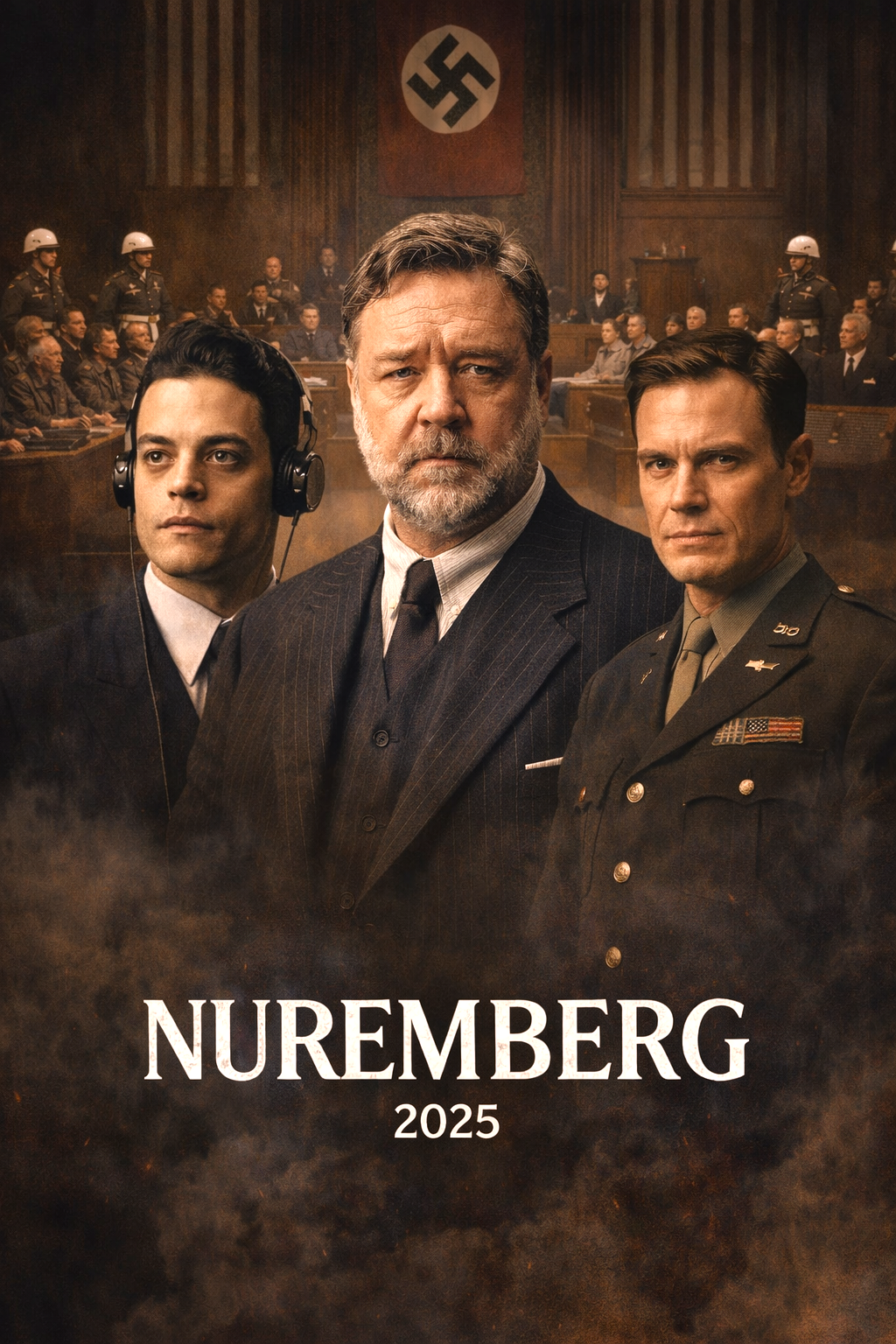
 NUREMBERG (2025)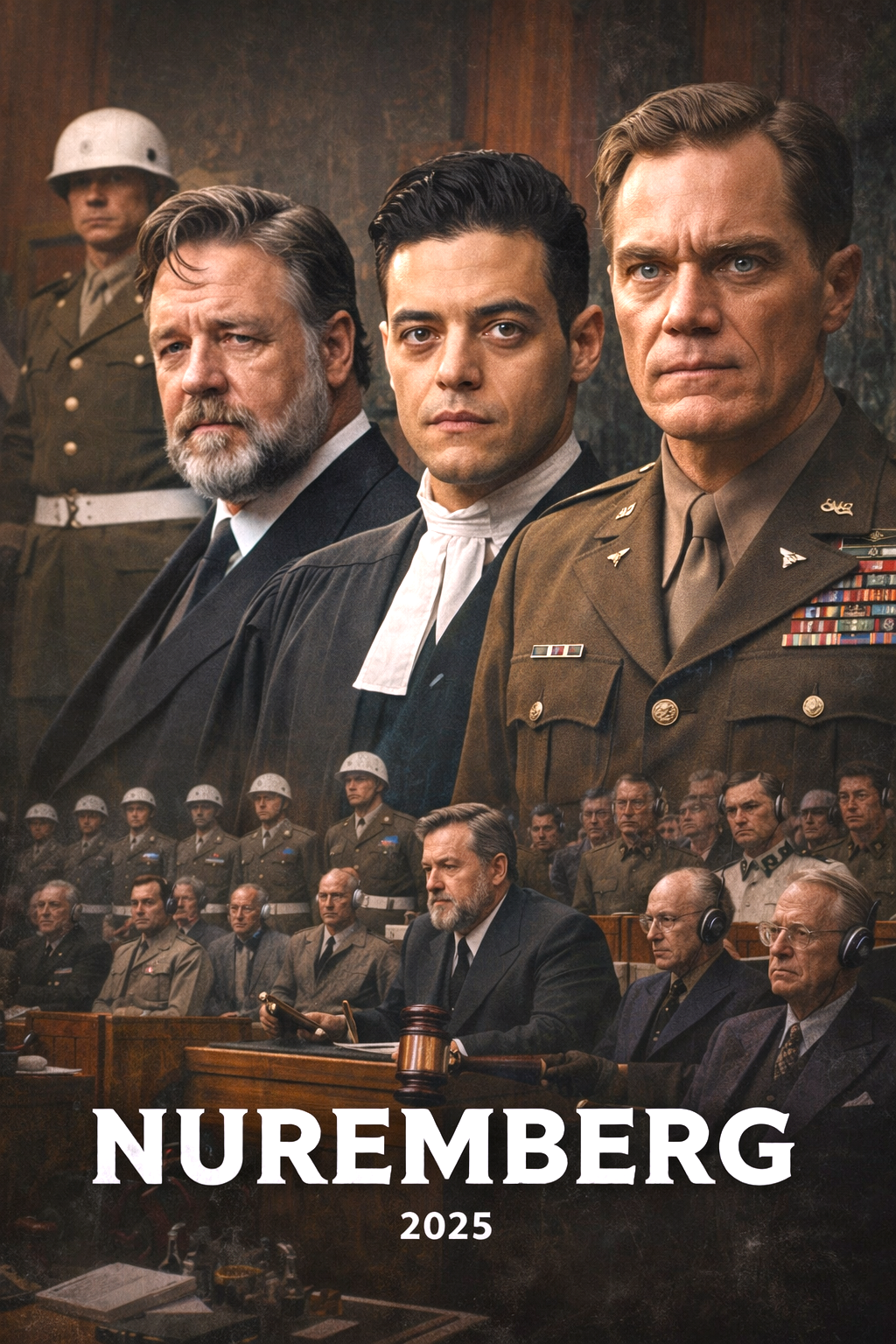
Genre: Historical Drama / Psychological Thriller
Director & Writer: James Vanderbilt
Starring: Russell Crowe, Rami Malek, Michael Shannon, Richard E. Grant, John Slattery, Leo Woodall, Colin Hanks, Wrenn Schmidt
 Overview:
Nuremberg dramatizes the real-life events surrounding the post-World War II Nuremberg Trials, focusing on the psychological and moral complexities of holding Nazi leaders accountable for war crimes. The story centers on Dr. Douglas Kelley (Rami Malek), a U.S. Army psychiatrist tasked with evaluating high-ranking Nazi prisoners — most notably Hermann Göring (Russell Crowe) — to determine if they are fit to stand trial. As Kelley confronts the chilling charisma and manipulative intellect of Göring, the film becomes both a courtroom drama and a psychological duel about guilt, responsibility, and the nature of evil.
 Highlights:
Russell Crowe — Commanding and Disturbing
Crowe delivers a powerful performance as Hermann Göring, balancing charm and menace. His portrayal captures the paradox of a charismatic leader whose words and demeanor can be almost magnetic even as his actions represent some of history’s darkest truths. Many reviewers singled out his work as the film’s emotional and dramatic anchor.
Rami Malek — Nuanced but Uneven
Malek portrays Dr. Kelley with intelligence and sensitivity, navigating the ethical maze of his assignment. While he brings commitment to the role, some critics and viewers felt his performance was uneven at times — strong in introspective moments but less convincing in big confrontations.
Intellectual and Moral Engagement
The film leans heavily into thoughtful dialogue and moral questioning. Rather than big battle scenes, most tension arises from psychological confrontation and courtroom strategy. It effectively raises questions about justice, the psychology of evil, and the challenge of prosecuting sheer ideological atrocity.
Supporting Cast Brings Depth
Michael Shannon’s portrayal of Justice Robert H. Jackson and Richard E. Grant as British counsel add perspective to the legal and moral debates, providing gravitas and structure to the film’s central conflict.
 Final Verdict:
 Nuremberg (2025) is a thoughtful and compelling historical drama that excels when it leans into character study and moral interrogation. Crowe’s portrayal of Göring is magnetic and unsettling, and the film’s exploration of justice and accountability resonates strongly in a time still wrestling with questions of evil and responsibility. While its measured pace and sometimes dense script may not appeal to all viewers, Nuremberg stands out for its performances, historical significance, and ethical inquiry.
 “History is a judge, but humanity wrote the trial.”