SHELTER (2026)
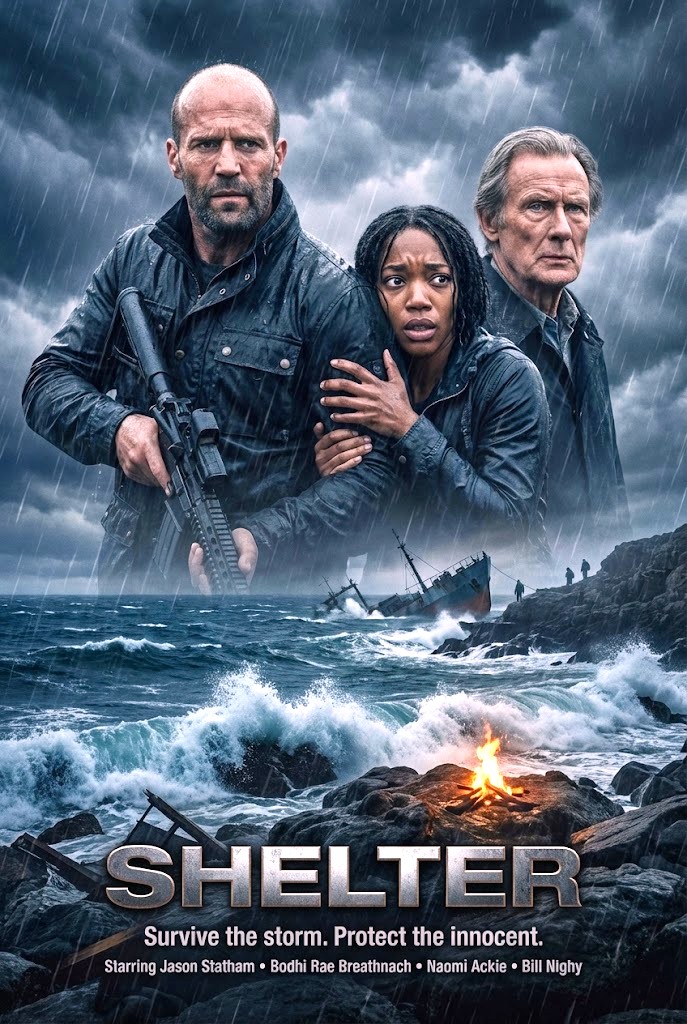
 SHELTER (2026)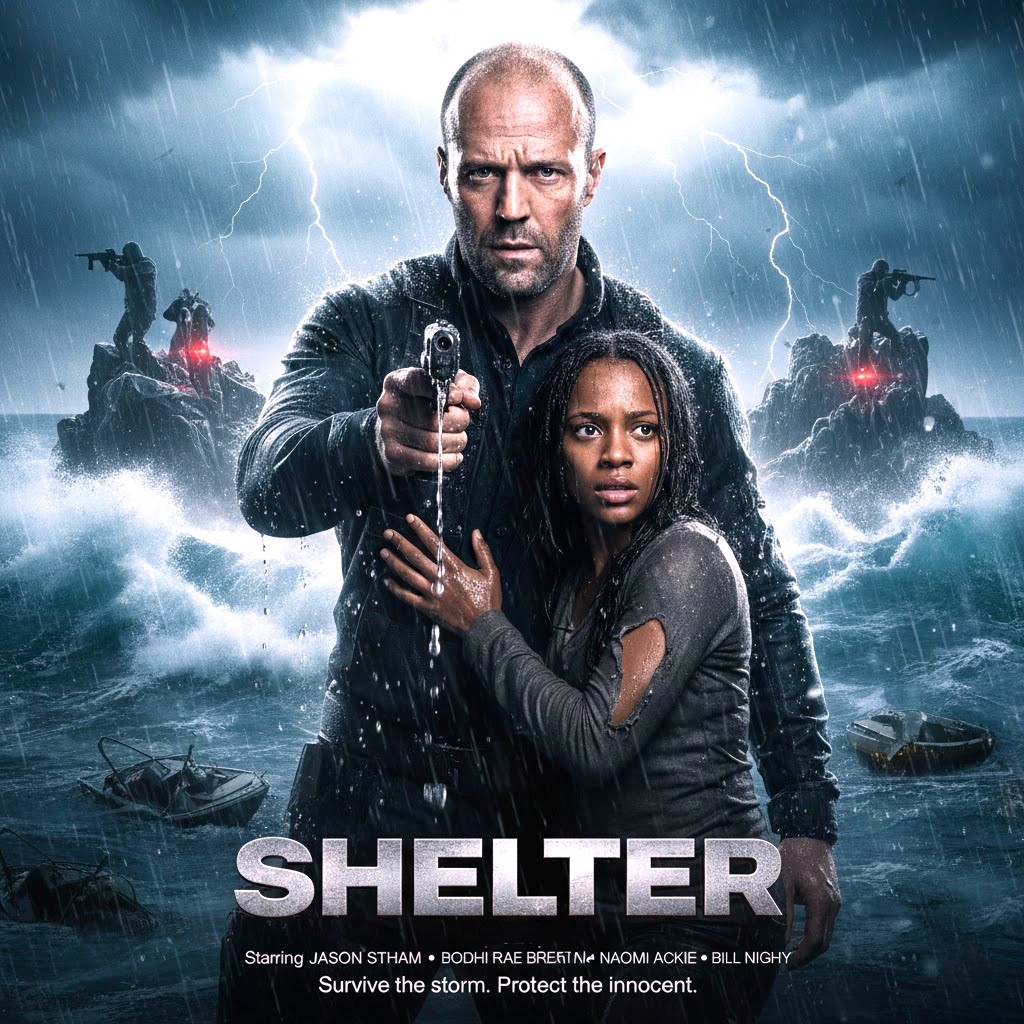
 Starring: Jason Statham • Bill Nighy • Naomi Ackie
 “You can run from the world… but not from who you are.”
 Review:
Directed by Ric Roman Waugh (Greenland, Angel Has Fallen), Shelter strips Jason Statham down to his most raw, grounded, and human performance in years. Gone are the flashy gadgets and globe-trotting chaos—this is a lean survival thriller where violence feels personal, sudden, and devastating.
Statham plays Michael Mason, a reclusive man living alone on a harsh coastal island, deliberately cut off from society. His fragile peace is shattered when he rescues a young girl from a violent storm—an act of mercy that drags his buried past back into the light. What follows is not a nonstop shoot-’em-up, but a slow-burning escalation of danger, as shadowy figures close in and Mason is forced to become the man he tried to leave behind.
The trailer promises — and the film delivers — suffocating tension: crashing waves, howling wind, cramped interiors, and sudden bursts of brutal action. Every punch, every gunshot lands harder because it’s used sparingly. The setting itself becomes an antagonist, with nature mirroring Mason’s isolation and inner conflict.
 Tone & Performances:
Jason Statham is excellent—quiet, restrained, and haunted. When violence erupts, it feels earned and terrifying.
Bill Nighy adds gravitas and moral weight, hinting at the larger forces circling Mason.
Naomi Ackie grounds the story emotionally, preventing it from becoming just another lone-wolf thriller.
Why It Works:
Shelter succeeds by focusing on character over carnage. It’s about protection, redemption, and the cost of survival. Ric Roman Waugh’s direction keeps the stakes intimate, proving that Statham doesn’t need excess to be compelling—just pressure, purpose, and consequence.
Overall Verdict:A grim, atmospheric action thriller that feels more like prestige survival cinema than a typical Statham vehicle. Tense, emotional, and brutally efficient, Shelter (2026) shows what happens when action slows down—and hits harder because of it.