Global Economic Concerns Rise as Middle East Conflict Threatens Oil Supply

Growing tensions between the United States and Iran are raising serious concerns among economists and policymakers about the potential impact on the global economy. Experts warn that continued fighting in the Middle East could disrupt energy supplies and international trade, triggering widespread economic consequences.
The Critical Role of the Strait of Hormuz
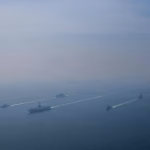
Much of the concern centers on the strategic Strait of Hormuz, one of the most important energy shipping routes in the world. This narrow waterway connects the Persian Gulf to the Gulf of Oman and serves as a key passage for oil exports from major producers in the region.
Approximately 20% of the world’s oil supply normally passes through the Strait of Hormuz each day. Because of its strategic importance, any disruption to shipping in the strait could quickly drive global fuel prices higher and cause instability in energy markets.
Military tensions in the region have already raised fears that the route could become a target during the conflict. Iran has previously warned that it could take action against vessels passing through the strait if hostilities continue to escalate.
Asian Economies Most at Risk
Countries in Asia are considered particularly vulnerable to disruptions in Gulf oil shipments. Major economies such as China, India, Japan, and South Korea rely heavily on energy imports transported through the Persian Gulf.
These nations import large volumes of crude oil from Middle Eastern producers, meaning that any interruption in supply could quickly affect their energy security and economic stability. Governments in these countries are closely monitoring the situation and assessing contingency plans in case shipping routes are disrupted.
Rising Oil Prices and Inflation Risks
Recent developments in the conflict have already shaken global energy markets. Oil prices surged sharply when fears of supply disruptions first emerged, reflecting the market’s sensitivity to geopolitical risks in the Middle East.
Economists warn that sustained increases in oil prices could fuel inflation worldwide, making transportation, manufacturing, and electricity production more expensive. Higher energy costs often ripple through the economy, leading to increased prices for goods and services.
If the conflict continues to escalate, analysts say it could also slow global economic growth, particularly in countries that rely heavily on imported energy.
Global Markets Watching Closely
Financial markets and international institutions are now closely watching developments in the Middle East. Any escalation that threatens oil infrastructure, shipping routes, or production facilities could quickly trigger further price spikes and market volatility.
The conflict, which began as a regional military confrontation, is now increasingly seen as a potential global economic risk, highlighting how instability in key energy-producing regions can affect economies around the world.
As tensions remain high, governments, energy companies, and financial markets continue to monitor the situation, aware that developments in the Middle East could shape the direction of the global economy in the months ahead.