U.S. Senate Rejects Resolution to Limit Trump’s War Powers Amid Escalating Iran Conflict
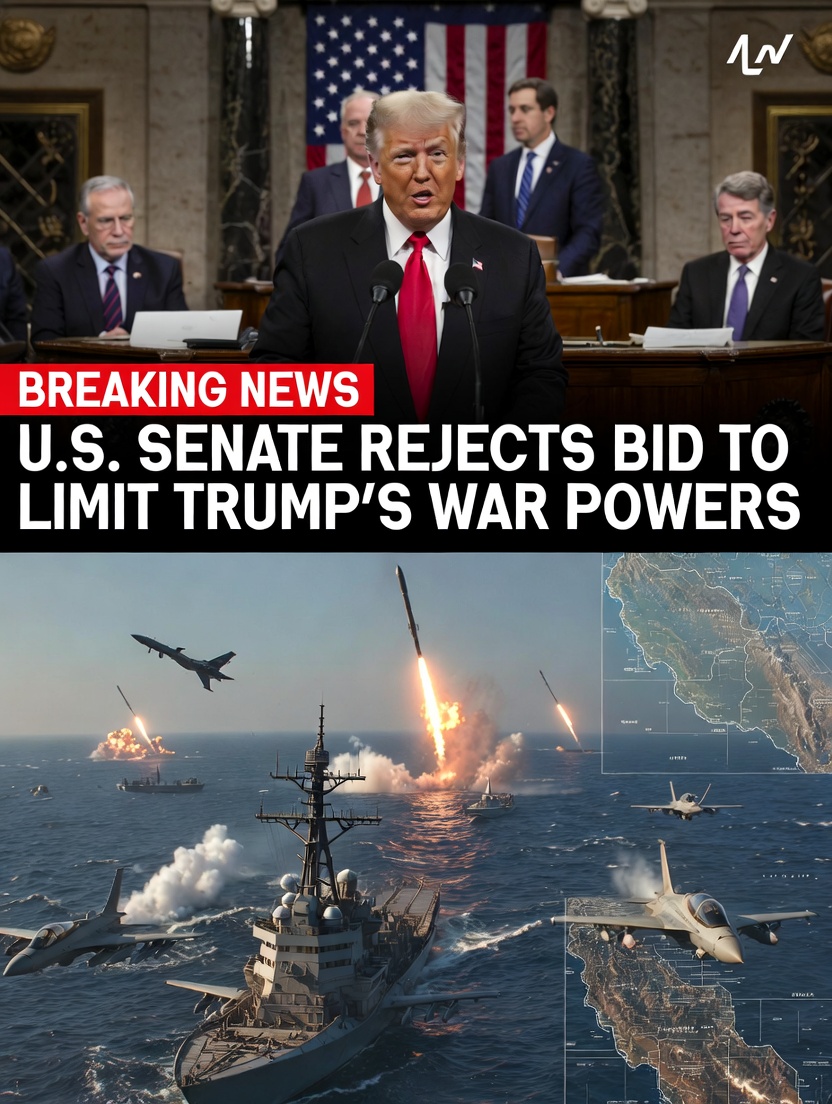
The U.S. Senate voted 53–47 on a resolution that sought to restrict President Donald Trump’s authority to conduct military operations against Iran without congressional approval. The measure, introduced by Senators Tim Kaine and Rand Paul, was rejected, allowing the president to continue the U.S.–Israel military campaign against Iran.
Senate Vote and Political Divide
The final tally of 47 votes in favor of limiting presidential authority versus 53 votes against reflected a sharp partisan divide. Most Republican lawmakers supported the president’s ability to conduct military operations independently, arguing that rapid action is necessary to counter Iran’s missile and drone programs.
Democrats and a small number of Republicans expressed concerns that continuing military operations without congressional oversight could lead the U.S. into a prolonged conflict similar to the wars in Iraq and Afghanistan.
Status of U.S. Military Operations
The Pentagon reported that military operations against Iran are still in the early stages, though activity is expanding. Key developments include:
- Striking over 2,000 targets across Iran, including military bases, missile sites, and command centers
- Sinking 20 Iranian warships to limit Tehran’s naval capabilities in the Gulf
- No deployment of U.S. ground troops yet, though the option remains under consideration
Military analysts say that the campaign, led jointly with Israel, is focused on degrading Iran’s missile, drone, and military infrastructure, while avoiding a full-scale occupation.
Escalating Tensions in the Middle East
The vote comes as the conflict continues to intensify, with Iran retaliating through missile and drone attacks targeting Israel and U.S. interests in Gulf countries including Saudi Arabia, Kuwait, Qatar, and the UAE. Civilian areas in Iran have also suffered from airstrikes on oil facilities and military infrastructure.
Regional analysts warn that the fighting could spread further, involving Hezbollah in Lebanon, militia groups in Iraq, and potentially other Gulf nations. The crisis has already affected global energy markets, raising oil prices and threatening key shipping lanes such as the Strait of Hormuz.
Implications for U.S. Policy
By rejecting the resolution, the Senate effectively allowed President Trump to maintain full military authority in the ongoing campaign, signaling congressional support for decisive action against Iran. Critics, however, caution that without clear oversight, the conflict could escalate into a long, costly war, reminiscent of past U.S. interventions in the Middle East.
The vote highlights the tension between rapid military action and congressional oversight, a debate likely to continue as the situation in the Middle East develops.
The ongoing conflict underscores a volatile moment for U.S. foreign policy, with the potential for significant regional and global consequences as hostilities continue.