US–Israel War with Iran Escalates on Day 9: Thousands Killed, Regional Tensions Soar
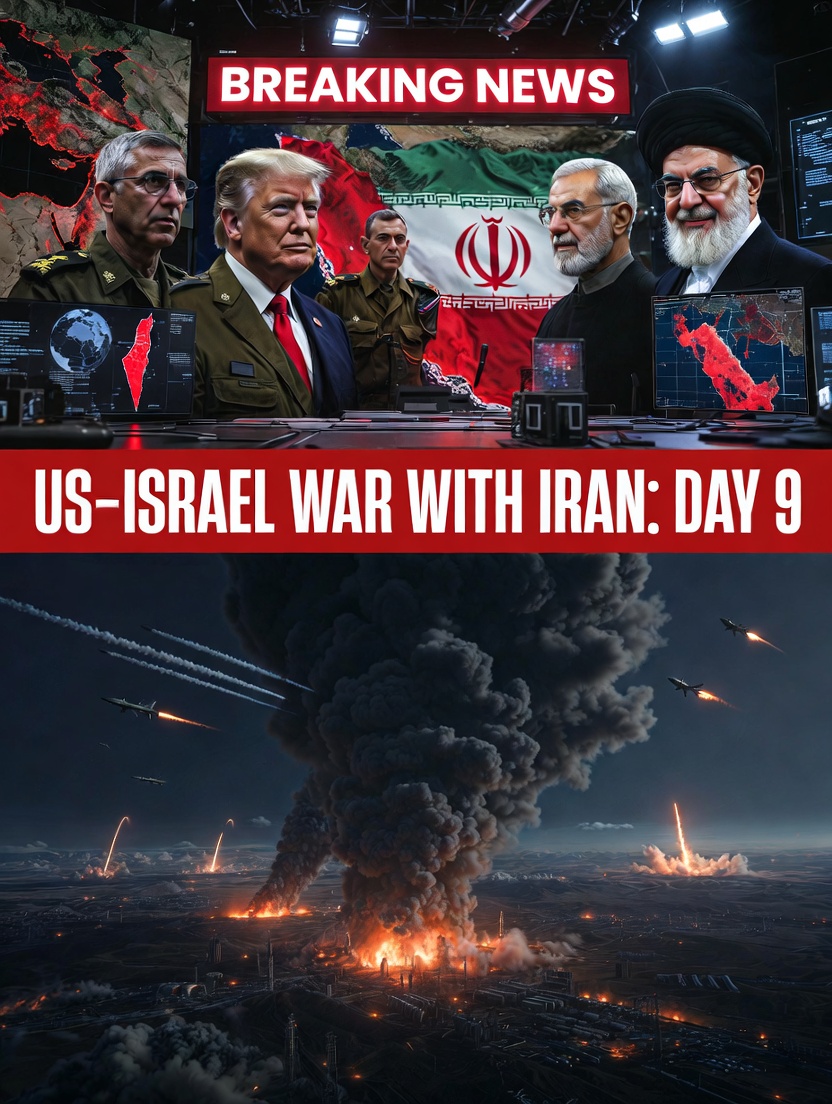
The conflict between Iran, Israel, and the United States intensified dramatically on Day 9 of the war, with large-scale airstrikes, missile launches, and drone attacks affecting multiple countries across the Middle East.
Major Airstrikes in Iran
Since the war began on February 28, Israeli and U.S. forces have conducted extensive air operations across Iran, targeting military installations, defense infrastructure, and key energy facilities. Strikes on oil depots near Tehran have caused massive fires, environmental hazards, and civilian casualties.
According to official and media reports, the ongoing conflict has killed at least 1,332 people in Iran. Human rights organizations have raised concerns about potential violations, including an attack on a school that reportedly killed around 160 civilians, which could constitute a war crime.
Iran’s Retaliation Across the Region
In response, Iran has launched a series of missile and drone attacks targeting Israeli and U.S. military assets across Gulf countries including:
- Kuwait
- Qatar
- Saudi Arabia
- United Arab Emirates
Iran also warned that it may strike U.S. or Israeli vessels in the Strait of Hormuz, a strategic chokepoint responsible for a significant portion of global oil shipments.
Spread of Conflict to Lebanon and Iraq
The war is no longer confined to Iran. Fighting has expanded into neighboring countries:
- In Lebanon, the Iran-backed group Hezbollah attacked Israeli targets, prompting retaliatory Israeli airstrikes on locations in Beirut.
- In Iraq, tensions are rising as Iran-aligned militias reportedly carried out attacks targeting Israeli and coalition forces.
These developments have increased fears that the conflict could spark a broader regional war involving multiple states and armed groups across the Middle East.
Global Economic Impact
The war has also disrupted international trade, particularly shipping through the Strait of Hormuz. Oil prices surged by 27% in one week, marking the largest weekly increase since the COVID-19 pandemic, as traders reacted to threats to one of the world’s most critical energy routes.
U.S. Position and Duration of Conflict
Former U.S. President Donald Trump has stated that the campaign is expected to continue for “a little while”, demanding Iran’s unconditional surrender. The White House reportedly anticipates that military operations could last four to six weeks, although ongoing escalations could extend the timeline.
Political Developments in Iran
Amid the ongoing conflict, Iran may soon announce a new Supreme Leader following reports of Ali Khamenei’s death. Israel has warned that it may target any successor, signaling potential new flashpoints in the already tense standoff.
Outlook
With thousands killed, multiple countries involved, and civilian infrastructure under threat, the conflict remains extremely volatile. Analysts warn that without diplomatic intervention, fighting could continue to escalate, drawing in additional regional powers and further destabilizing global energy markets.
The ninth day of fighting underscores how quickly the Iran–Israel–U.S. confrontation has evolved into a full-scale regional crisis with international ramifications.