UN Chief Warns Middle East Violence Could “Spiral Beyond Anyone’s Control”
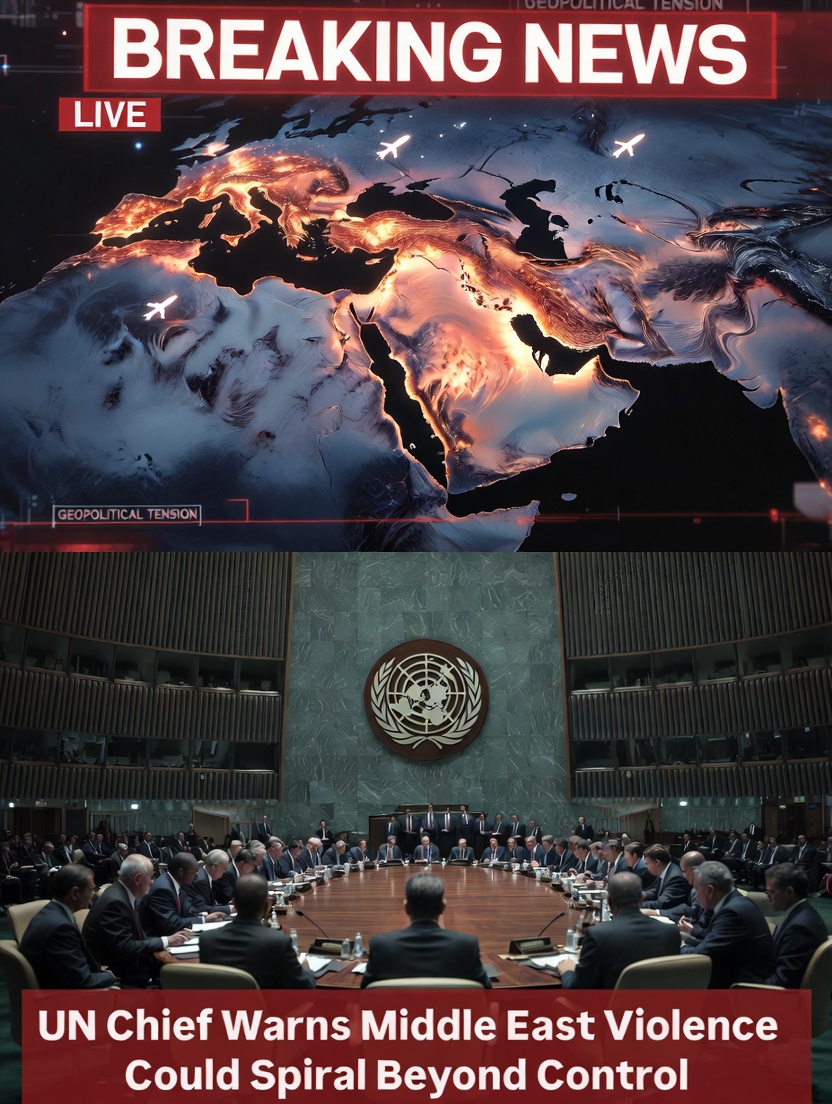
The head of the United Nations has issued a stark warning about the rapidly escalating violence across the Middle East, cautioning that the conflict could soon expand into a crisis far beyond the control of the parties involved.
António Guterres, Secretary-General of the United Nations, said the current situation is extremely dangerous and urged all sides involved in the conflict to immediately halt military operations and return to diplomatic negotiations.
“The Stakes Could Not Be Higher”
In a statement shared on social media platform X, Guterres emphasized the seriousness of the situation as fighti ng continues across several parts of the region.
“The stakes could not be higher,” he said, warning that continued military escalation risks triggering a wider regional crisis.
According to the UN chief, ongoing attacks and retaliation across the Middle East are already causing tremendous suffering for civilians, with communities facing destruction, displacement, and growing humanitarian needs.
He also condemned unlawful attacks carried out during the conflict, noting that violence affecting civilian populations is a violation of international norms and contributes to deepening instability.
Civilians Bear the Greatest Cost
Guterres highlighted that ordinary people are paying the highest price as hostilities intensify. Civilians in several countries across the Middle East have been forced to flee their homes, while many others remain trapped in areas affected by airstrikes, missile attacks, and military operations.
Humanitarian organizations have warned that the conflict is placing enormous strain on local infrastructure, including hospitals, emergency services, and food supply networks.
The UN secretary-general stressed that protecting civilians must remain a top priority for all parties involved in the fighting.
Global Economic Risks Growing
Beyond the humanitarian consequences, the United Nations is also concerned about the broader global impact of the conflict.
Guterres warned that escalating violence in the Middle East could pose a serious threat to the global economy, particularly if key trade routes, energy infrastructure, or supply chains are disrupted.
The region plays a crucial role in global energy production and international shipping. Instability in the area could therefore affect oil prices, international trade flows, and economic stability in many countries.
According to the UN chief, the economic consequences would be felt most severely by the world’s most vulnerable populations, who are already struggling with inflation, food insecurity, and fragile economic conditions.
Call for Immediate Diplomacy
As tensions continue to rise, Guterres urged all parties involved in the conflict to shift their focus away from military escalation and toward serious diplomatic engagement.
“The situation could spiral beyond anyone’s control,” he warned, stressing that continued violence increases the risk of a much larger and more destructive conflict.
He called on governments and international actors to prioritize dialogue and negotiation in order to prevent further escalation and to work toward a peaceful resolution.
Diplomatic efforts by global leaders and international organizations are expected to intensify in the coming days as the international community attempts to prevent the crisis from expanding further.
For now, the United Nations says the message is clear: the violence must stop before the conflict grows into a far more dangerous regional war.