U.S. Strikes Over 3,000 Targets in First Week of Operation Epic Fury, 43 Iranian Ships Damaged or Destroyed
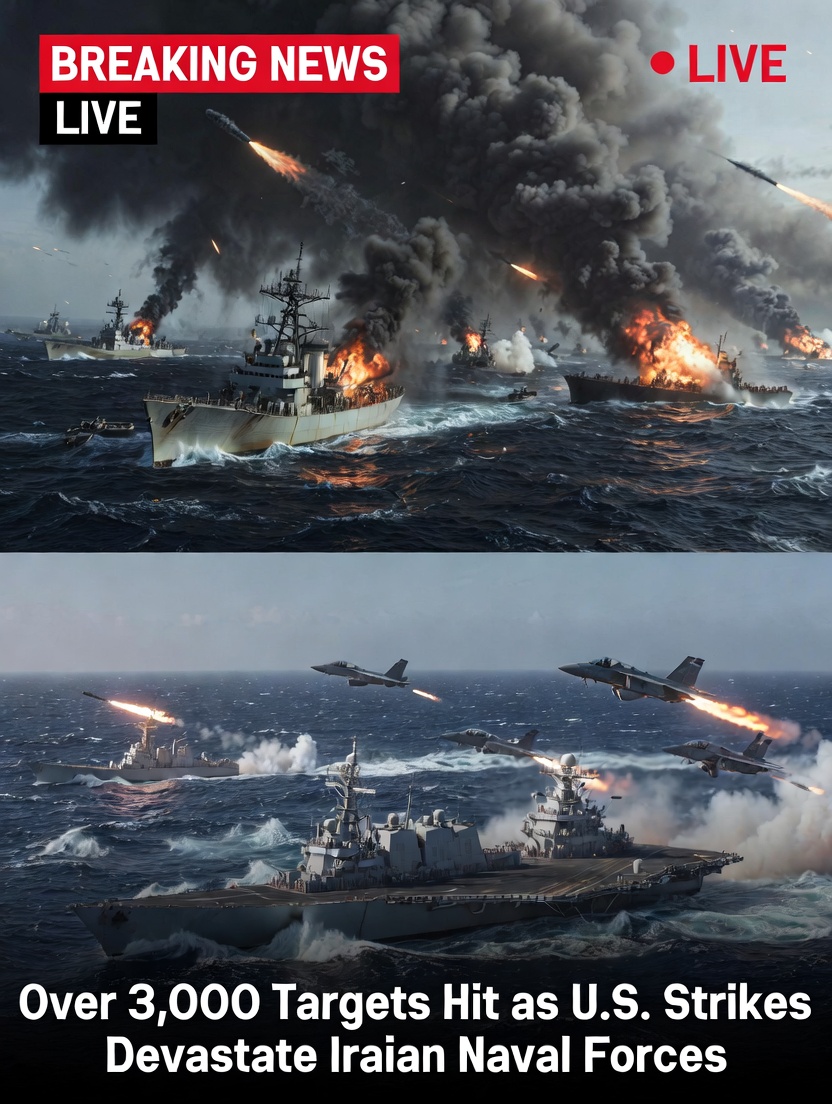
The United States military has carried out a massive wave of attacks against Iranian-linked targets during the opening week of a major campaign known as Operation Epic Fury, according to new figures released by United States Central Command (CENTCOM).
Officials said that during the first seven days of the operation, U.S. forces struck more than 3,000 targets, while 43 Iranian ships were reported damaged or destroyed. The scale of the strikes highlights the rapid intensification of military activity in the region as tensions between the United States and Iran continue to escalate.
Massive Air and Naval Campaign
According to CENTCOM, the strikes were carried out using a combination of air power, naval assets, and precision-guided weapons targeting a wide range of Iranian military infrastructure.
The operation reportedly focused on strategic assets including missile launch sites, drone facilities, radar systems, command centers, and naval vessels believed to be connected to Iranian military operations.
Military analysts say the campaign represents one of the most intense periods of U.S. military action in the Middle East in recent years, with hundreds of targets being hit each day during the initial phase of the conflict.
The damage to 43 Iranian ships is particularly significant, as it could weaken Iran’s ability to conduct naval operations or disrupt shipping routes in the region.
Data Compiled From Multiple Sources
The figures released about the strikes were compiled through a collaborative effort involving reporting and analysis from CBS News, which gathered data from several sources to estimate the scale of the campaign.
According to the report, the numbers reflect information collected up to 5 p.m. Eastern Time on Friday. The dataset combines multiple streams of information, including:
-
On-the-ground reporting and official government statements
-
Visual verification of strike locations and damage
-
Military estimates released by officials
-
Independent analysis from research organizations
One of the key analytical sources contributing to the data is the Institute for the Study of War, a think tank known for tracking and analyzing military conflicts around the world.
By cross-referencing these sources, analysts were able to estimate the number of strikes and the types of targets involved in the operation.
Naval Losses Raise Strategic Questions
The reported damage or destruction of dozens of Iranian vessels could have major implications for regional maritime security. Iran’s naval forces, including elements of the Islamic Revolutionary Guard Corps Navy, have long played a key role in the country’s strategy for projecting power in nearby waters.
These vessels are often used for patrol operations, missile launches, and monitoring of shipping lanes across strategic waterways.
Military experts say that the loss of dozens of ships could significantly reduce Iran’s operational capacity at sea, at least in the short term.
However, Iran maintains a large fleet of smaller fast-attack boats and other asymmetric naval capabilities, meaning it may still retain the ability to challenge adversaries in regional waters.
Risk of Wider Regional Escalation
The scale of the attacks during Operation Epic Fury has raised serious concerns among international observers about the possibility of further escalation across the Middle East.
A large military campaign targeting thousands of sites could provoke additional retaliation from Iran or allied groups in the region. Several analysts warn that continued strikes and counterstrikes could pull more countries into the conflict.
Regional stability is already under pressure due to ongoing tensions involving multiple actors and ongoing conflicts in neighboring areas.
A Rapidly Developing Situation
As the operation enters its second week, military planners and analysts are closely watching how Iran responds to the scale of the damage inflicted on its infrastructure and naval forces.
While the United States has emphasized that its operations are focused on strategic military targets, the intensity of the campaign suggests the conflict could continue to expand if diplomatic solutions remain out of reach.
For now, the figures released by CENTCOM provide a glimpse into the massive scale of the operation underway, with thousands of targets already struck and dozens of vessels removed from Iran’s naval capabilities.
Observers warn that the coming days could prove critical in determining whether the conflict stabilizes—or escalates even further.