
Martín Izaguirre Salgado keeps a souvenir from his time working on a liquid petroleum gas tanker that came under fire in the Red Sea two years ago.
Four missiles exploded so close to his ship that little pieces of shrapnel rained down on the deck.
“I keep some of those pieces at home,” said Salgado, who has worked as a seafarer since 2021.
For commercial seafarers like Salgado, there’s little President Donald Trump could say right now that would convince them to sail through the Strait of Hormuz. Trump has promised to provide government-backed insurance policies and naval escorts to keep ships moving. But threats from Iran to attack any ships in the region outweigh the promises of support.
“As long as they keep firing rockets or drones to merchant vessels, this unsafe feeling will remain there,” he told CNN from a tanker in the Persian Gulf.

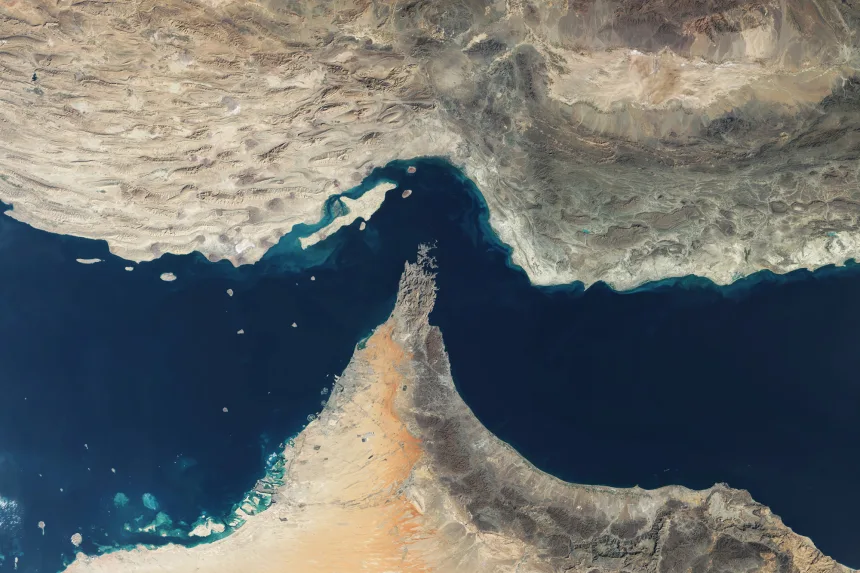
Zero tankers transited the Strait of Hormuz Wednesday, a narrow channel just off Iran’s southern coast that’s normally packed with an armada of 60 or more ships carrying 20% of the world’s oil. The Gulf today is packed with tankers and other ships unable to get out, including Salgado’s, which is anchored off the coast of Iraq.
Major ship lines Maersk and Hapag-Lloyd have stopped accepting most cargo destined for the Persian Gulf countries. Since fighting in Iran broke out over the weekend, maritime insurers have yanked war-related coverage for shipping companies.
There are dangers that the entire global supply chain could be upended, raising costs for businesses and their customers. The effective shutdown has already sent oil prices surging above $80 to their highest level since August 2024.
Trump’s plan is designed to give shipping companies assurances that they’d be able to move through the strait. But Gene Seroka, executive director of the Port of Los Angeles, said he doesn’t know of any shipping line that would take the risk.
“I have no evidence that (those promises) can be carried through,” said Seroka, who previously worked for American President Lines in the Middle East. “I just don’t see how it is possible with all my years in this industry. And I don’t see how we put folks at even more risk and be live targets in the open seas.”
Seroka said that after talking with shipping executives, it would take nothing short of a ceasefire to get commercial ships moving again.
“I don’t see any appetite to move cargo and put crew and assets in harm’s way,” he added.
Risk to more than tankers
First and foremost for shipping companies is concern for crew safety, said Sanne Manders, President of Flexport, a global shipping logistics company. But they also don’t want to put their physical cargo ships at risk, even with the promise of insurance.
“These companies (want to ensure that) their vessels are safe because those are very expensive, right? It’s hundreds of millions of dollars, so they’re not going to put those assets at risk for, let’s say, a commercial transaction,” Manders said.
There are also significant doubts there are enough Navy ships to escort commercial vessels, given that 60 or more tankers typically traverse the strait each day.
“Naval escorts would help reduce the threat for the ships being protected,” said Jakob Larsen, chief safety and security officer for Danish shipping association BIMCO. “That said, providing protection for all tankers operating in areas currently threatened by Iran is unrealistic as this would require a very high number of warships and other military assets.”

The US military provided escort service for tankers from the oil-rich Gulf states during the earlier Iran-Iraq war, noted Helima Croft, global head of commodity strategy at RBC Capital Markets and a former CIA analyst who worked at the agency during the Iraq war.
But she doesn’t believe that solution would work now because, back then, those countries were not under direct attack.
“We weren’t the active combatant then,” she said. “We’re the main character in this. We are not playing an auxiliary escort role.”
Rising costs for all shipping
In the near term, shippers are contending with rising prices for fuel. The world’s largest container shipping company, MSC, already announced fuel surcharges on shipments until at least April. That cost will likely to be passed onto businesses and ultimately consumers.
But there are bigger problems looming if ships don’t get moving again.
One major concern is that the crisis will throw the entire global supply chain out of whack as it did during the height of the pandemic. Empty containers in the wrong locations, ships gridlocked outside of ports and other logistical problems raised prices sharply for a wide variety of goods.
“The longer it takes, the higher the chance is that there is going to be port congestion,” said Flexport’s Manders, who said ships destined for the Persian Gulf will head elsewhere.
“Ports, especially in Asia, are already quite full…And that is going to impact global shipping,” he added.
The US-allied Gulf states are also cut off from receiving shipments. That’s critical as six Gulf Arab nations – Oman, Saudi Arabia, United Arab Emirates, Qatar, Bahrain and Kuwait – import about 85% of their food.

Salgado’s ship has been anchored outside Iraq since February 26, about 400 nautical miles from the strait. Its still waiting to load up and head to Bangladesh.
His contract had originally been due to end Friday. He still wishes he was just a day away from returning home to Spain.
“That’s our feeling now, being stuck and unable to predict when will we be able to sign off,” he said.