It’s difficult these days to make a nature documentary that isn’t like all the others. Spectacular landscapes, crisp closeup photography, tales of predation and survival, birth and death: whether you go for Pixar cuteness, crimson claws or environmental crisis, it’s been done 100 times before. Watching The Dinosaurs, it’s hard not to sense the same problem starting to affect factual shows about the animal kingdom as it was millions of years ago. Impressive as it is that big-money dino documentaries boast visual effects that look similar to footage of Earth today, we are getting used to it.
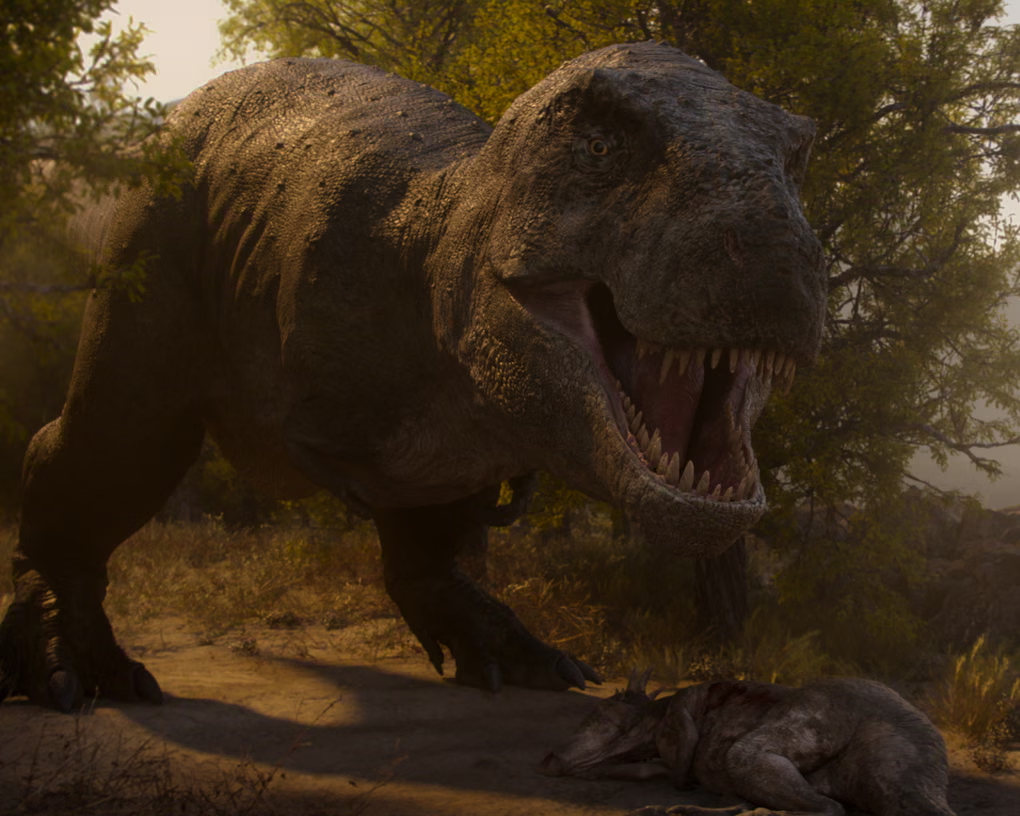
Before the opening titles roll, cliches from two genres have been cross-bred. From regular animal shows, there’s the one where a lone male tries to muscle in on a family unit, forcing the existing patriarch to fight for his status against a younger, stronger rival. Our friend who looks as if he’s about to be fatally pushed aside is a pachycephalosaurus, but the dynamic is the same. Then the two males’ head-smashing battle is interrupted by a familiar sight from dinosaur documentaries: the animal posing a threat is suddenly bitten in two by a Tyrannosaurus rex, leaping unbidden through the undergrowth with a camp flourish. The pachycephalosaurus clan, led by their relieved dad, scurry happily away to the sound of the interloper’s cracking skull.
On voiceover is Morgan Freeman, a reliable provider of grand Hollywood vibes whose gravelly folk-tale delivery is starting to slide into self-parody, but no less pleasing for that. He has a lovely habit of bringing us home in the last half-syllable of a line by modulating down into a bassy growl, not unlike the satisfied sigh of a sated apex predator. With him talking us through it, you could conceivably use the audio of The Dinosaurs as a relaxation tape.
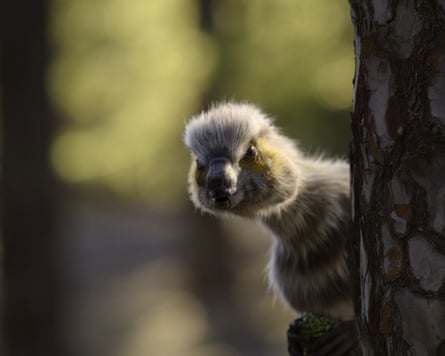
Life isn’t relaxing for many of the creatures featured, however, since the story is an endless churn of species struggling to establish themselves before being superseded by nastier, toothier new arrivals. Then everyone is killed by climate change – flood, drought, ice, another flood – and the cycle starts again. It all begins 235m years ago on the vast supercontinent of Pangea, which is initially dusty and inhospitable: “Saaaandstorms,” intones Freeman, sounding as if there’s one in his larynx.
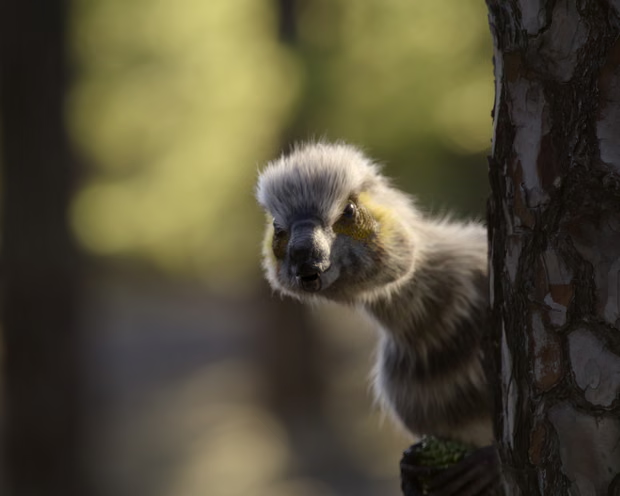
The ancient reptiles give way to a new wave, the dinosaurs, whose evolution is kickstarted by the diminutive marasuchus avoiding being eaten by getting up on two legs and running. One of them excitingly manages to nibble on a carcass by tiptoeing up to it while the bigger animal that killed it is taking a nap. The Dinosaurs loves its tiny underdogs, comparing the dinkier dinosaurs to turkeys, chickens and chihuahuas, but in no time at all – just 10 or 20m years – these critters have become giants, the sort of megabeasts Freeman refers to as the greatest dinosaurs in history; or, when he gets to T rex and triceratops, “the most iconic dinosaurs of all time”. Elsewhere, there is a dilophosaurus (the one with the twin red crests on his skull; you remember, he ate Newman from Seinfeld in the original Jurassic Park movie) doing a dance to impress a mate, and a hadrosaur mother leaving her babies behind in the creche-like environment of the herd while she finds food, but then sprinting back to save them when an aerial predator swoops towards the nest.
It’s handsome – the geology and meteorology are particularly affecting, while the dinosaurs are only a notch below the very best photorealist simulations we have seen. If there’s an issue, apart from the well-worn storytelling, it’s the pace and depth of the narrative. The show is keen not to overload us with science but, in the demographic of people willing to spend several hours watching a factual show about dinosaurs, a significant percentage are amateur experts: a lot of folk who like dinosaurs know an awful lot about them, in a way that viewers who might casually tune in to a show about lemurs or dolphins probably do not. They might be frustrated by how little cutting-edge detail there is on each species and era, as the show pitches itself more towards families. The children of those families will, however, come away with a good grounding in evolution, and in what havoc can be wreaked by shifts in the climate.
There is, of course, a belter of an ending. “Aaaasteroid,” booms Freeman at a frequency low enough to crack one in two, as bigger dinosaurs chew idly on smaller dinosaurs’ limbs and wonder what that object in the sky is. They have had a good run but, 66m years later, this version of their story feels a little old.