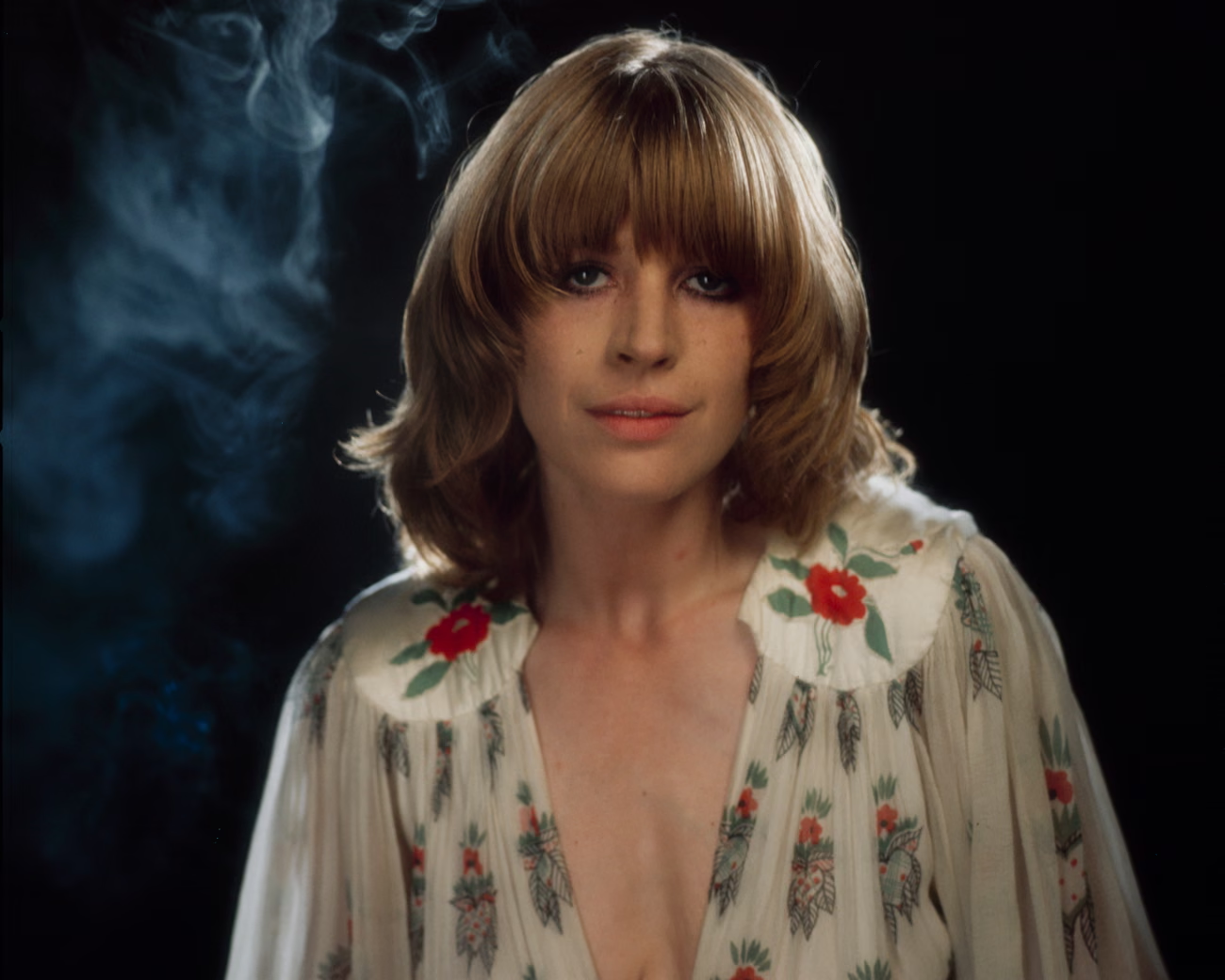
When Marianne Faithfull died early in 2025, at the age of 78, she left the world one final musical performance. It comes at the end of a new film, Broken English, celebrating her six-decade career. It is a deeply moving scene, almost guaranteed to leave you in tears. You don’t need to be a full-on fan, up to that point, to have relished Faithfull’s unvarnished takes on her astonishing life – but that final husky-voiced number, with Nick Cave and Warren Ellis accompanying, should clinch it.
How do you make a film about Faithfull without rolling out all the cringey 1960s rock mythology? Iain Forsyth and Jane Pollard seem to have nailed it. The film-makers initially had just three days with Faithfull, on a set at Elstree Studios in Hertfordshire. She was living in a care home and needed oxygen intermittently, meaning the pair had to work quickly. “She was so ill when we first met her,” says Pollard.
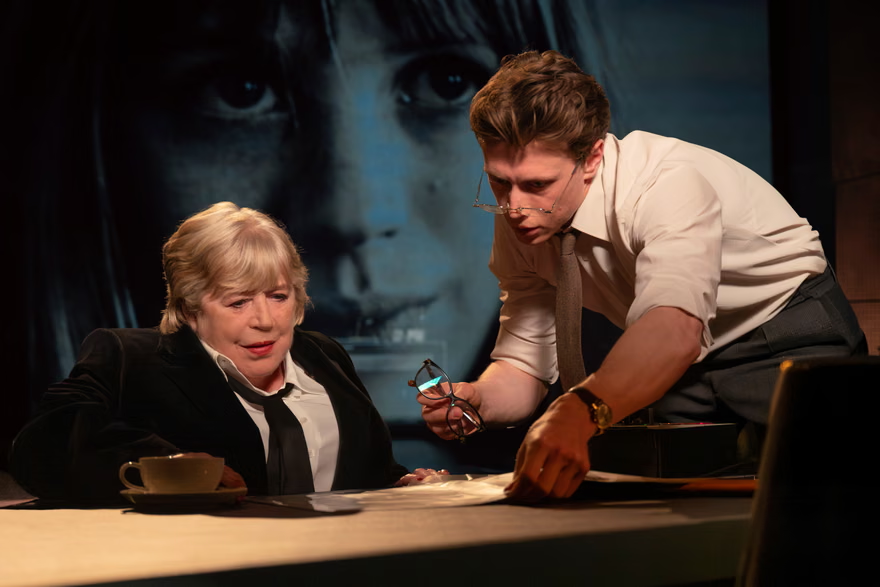
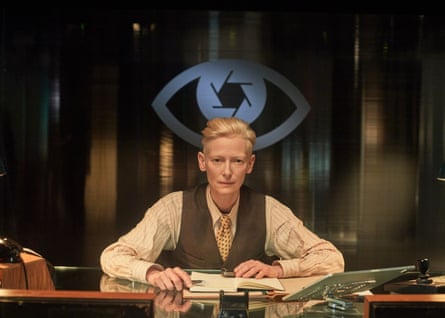
Their urgency to correct the record on an often misrepresented artist is reflected in the fictional setting for their film: a gloriously analogue organisation – all whirring tapes and clunking buttons – called The Ministry of Not Forgetting. Tilda Swinton plays its leader, overseeing a research team hellbent on logging all of Faithfull’s output, from playing Ophelia in Tony Richardson’s film of Hamlet, to teaching lyric-writing at the Jack Kerouac School of Disembodied Poetics, and her song Sister Morphine being pulled from the shelves.
During filming, Pollard noticed a “great truth” about Faithfull: she had an “eagerness to completely cut the atmosphere in a room and reset everything. To make people laugh or unnerve them – it’s like a weapon.” Minutes into the film, we hear Faithfull deploy the C-word. “It silenced the room,” Pollard recalls.
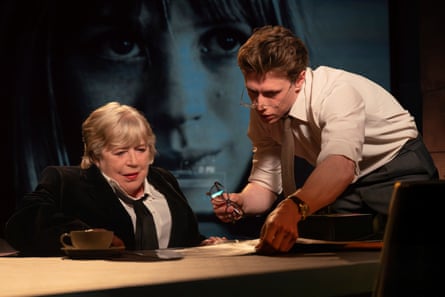
This happens during a series of nervy, now-or-never conversations with a researcher played by George MacKay. Faithfull is shown artefacts from her career. One excruciating old interview sees Rolling Stones manager Andrew Loog Oldham asked in relation to Faithfull: “Is it literally possible that you can go to a party and pick up someone with no evident talent and make a star of her?” “Er, yes,” says Loog Oldham. Faithfull, in the film, begs to differ, speaking in an exaggerated tone. “Of course you can’t go to a party and pick up someone with no talent and make them a star. Everyone knows that. Maybe it was good for me – because maybe I thought: ‘I’ll show you, you cunt.’”
And show them she did. As Swinton’s character recounts: “Over 30 albums, a vast stream of adoring collaborators, a Grammy nomination for [album] Broken English, the Commandeur Des Arts et des Lettres, awarded by the French government, it goes on. She survived addiction, overdoses, cancer and more … And yet, to the world at large, she’s still just Mick Jagger’s ex-girlfriend. Well, fuck that.”
The poignancy of watching Faithfull watch herself aged 19 in Dont Look Back – the 1967 documentary of Bob Dylan on tour – is brutal. “She lit up,” says Pollard. Dylan was coming on to her, Faithfull recalls. Hunched over a typewriter amid his entourage in a London hotel room, Dylan told her he was writing a poem about her. “If I had a dollar for every cute man who told me, ‘This song, this poem, is about you darling’, I’d be rich,” she says with a flourish, before looking on wistfully as her younger self harmonises with Joan Baez on As Tears Go By, the song Faithfull took to No 9 in the UK charts. “Joan Baez plays my song,” she says with the awe of a teenager, as if it had only just happened.
What most surprised Pollard about Faithfull? “Even though she’s still relatively self-sabotaging,” says the film-maker, “she was unjaded by the industry.” Yet Faithfull grows sombre when shown a clip of herself at 60 declaring that she loved being that age, feeling healthy and philosophical about things. She didn’t know what was coming, she says. “Now I’m less philosophical. I hate what’s happened to me. Covid did this.”
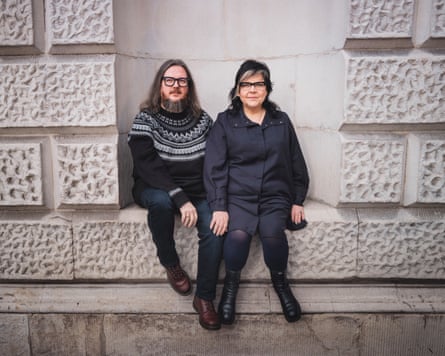
In person, says Pollard, Faithfull could be intimidating. “Really frightening. If you look at other films of her, you can see that she’s fucked somebody off so badly that they decide to let it leak into the film.” But this would have gone against the pair’s two rules for Broken English: “We don’t talk about children, because if this was a male artist, we would not be talking about their role as a father. The other was: she can be really, really annoying and incredibly intimidating but we just won’t show it. Because, again, with many male artists, there’s teams of people sweeping up after intimidating, careless behaviour.”
Forsyth brings up the drug raid in 1967 at Redlands, Keith Richards’ house. “‘Bad behaviour’, quote, unquote, by Mick and Keith makes them more interesting, more compelling, more exotic, more desirable. [When a male artist] has a tantrum at the end of a recording session, it’s because he’s a genius, overwhelmed with the emotion of it all. If a woman does it, it’s because she’s a bit of a bitch.”
In the film, we see Faithfull being professional, game, accommodating, apologising for needing her oxygen, and melancholy. When shown a recording of American poets Gregory Corso and Allen Ginsberg saying she has a good heart, she looks undone.
Forsyth and Pollard weren’t lifelong Faithfull fans when first approached about the project. “We grew up only knowing that godawful lie about Marianne,” says Pollard. Legend had it that, at the Redlands raid, police found Faithfull wearing nothing but a fur rug (true, for practical reasons) and performing a sex act with a Mars bar (false). “We weren’t fans of Marianne until much later, when lots of musicians we love were working with her: PJ Harvey, Damon Albarn, Jarvis Cocker, Metallica, Nick Cave and Warren Ellis.”
The film-makers have long been inspired by Krapp’s Last Tape, Samuel Beckett’s play about an old man listening to recordings of his younger self. “For most of the play,” says Pollard, “you’re listening to a younger Krapp and watching the face of an older Krapp. It is a beautiful study of ageing, human behaviour and memory.”
Before making Broken English, they spoke to Faithfull about the play and “this idea of watching her meet her younger versions. When we were pulling from the archive, we worked hard to find clips of her that were not just saying the usual stuff. Her memory had been really screwed up by Covid. I think it was incredibly fortifying for her to meet this army of younger Mariannes who all proved to her this consistency of character, this strength of mind.”
While researching, they began to appreciate the many traumas Faithfull had faced, sometimes all at once. “This clusterfuck of dates happened around 1969: Sister Morphine being withdrawn, her miscarriage and the death of [Rolling Stones guitarist] Brian Jones. They all happened in such a short amount of time. We wrote that up on a whiteboard and looked at it, going: ‘This is unbelievable.’ No wonder she flies to Australia. But it’s never been framed in that way.”
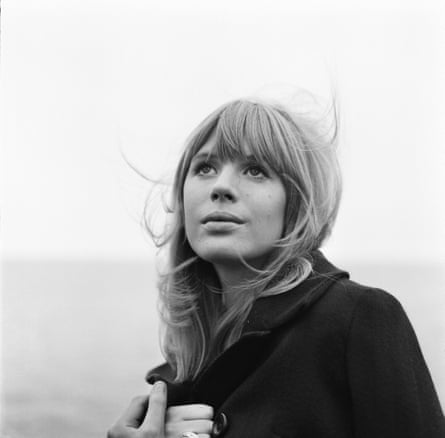
As shooting rolled on, “she actually got stronger”, says Pollard. “She found a purpose again. The film seemed, oddly, like a scaffold. She began to climb up this thing and wanted to write new songs, perform something.” Because it looked unlikely she would be able to sing for the film, other performers were drafted in, from Beth Orton to Courtney Love, who sings 1983’s Times Square. Pollard describes Love as “this brilliant, beaming cipher, singing that song about addiction and completely ruling that recording studio.”
Initially, the hope was that Faithfull would perform at the end of the three days of initial filming, but her doctor advised against this. “Her breathing was not strong enough,” says Forsyth. “She wouldn’t have been able to come off the oxygen for long enough.” But a year later, after practising with her friend David Courts, the jeweller who made Richards’ famous skull ring, Faithfull wanted to give it a go. So they went into the studio with Cave and Ellis.
“It was such a special moment,” says Forsyth, “seeing her in her natural environment with musicians she loved, all working together. It felt very special to be able to give her that towards the end of her life.” Were they all crying? “There were a few tears,” says Pollard. “I mean Warren Ellis cries almost every time Marianne sings. Her voice in the room is phenomenal. You can hear every fibre of her being.”