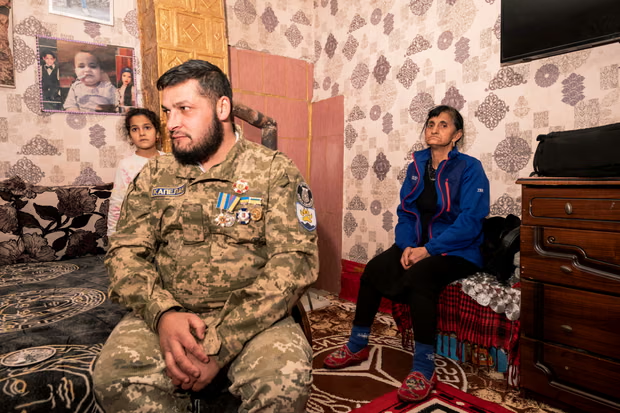
As a father of four, Viktor Ilchak was not supposed to serve in the army. Ukraine does not mobilise men who have three or more children. His wife and children cried and begged him not to go to war. But he had made up his mind. “A typical Capricorn, so stubborn,” says his wife, Sveta.
It was 2015, the war in Donbas was growing in intensity. “I heard someone on TV complaining that Roma aren’t defending their homeland. This pissed me off, and so I volunteered,” says Ilchak. In the territorial recruitment centre in Uzhhorod the Ukrainian soldiers were surprised, but they had to take him.
Ilchak and his family live in Radvanka, one of several Roma settlements in Uzhhorod, the capital of Transcarpathia, a Ukrainian province in the far west bordering Hungary, Slovakia, Romania and Poland. It hosts the largest population of Roma in Ukraine. About 3,500 people live here, explains Myroslav Horvat, the only Roma councillor in the city. The streets are unpaved and many houses have no running water.
Ilchak’s family lives in a room measuring about 10 sq metres. There are no windows and only basic furniture. The parents and three daughters sleep on the large bed, a teenage son on the floor.
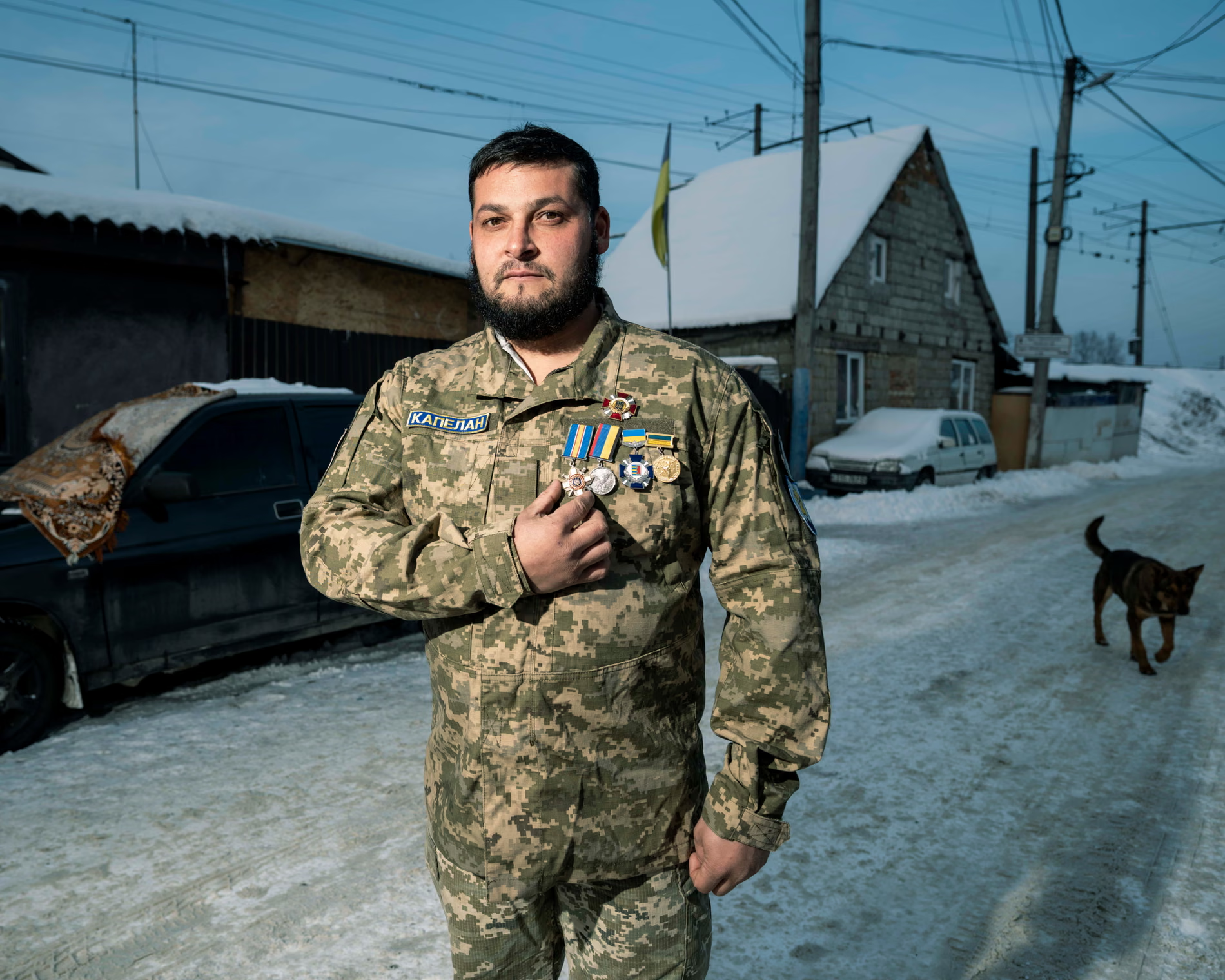
Ilchak fought in Donbas and after the full-scale invasion also served around Mariupol. As a tank mechanic he was wounded four times and carries shrapnel from a Russian bomb in his arm. On his army jacket there shine several medals, including the Order for Courage, presented to him by president Volodymyr Zelenskyy. He also got one from the city council because no other Roma person in Uzhhorod had served as long as him – a whole decade.
Last September, Ilchak returned home. For now, he takes care of his children and does what he can for the community. His main plan for this year is to set up an NGO. All documents have already been filed. The name: Transcarpathian Roma association of combatants, war veterans, chaplains and volunteers. It’s the first of its kind in the country.
No one really knows the size of Ukraine’s Roma community. The last census, from 2001, cites a figure of 47,587. The Council of Europe estimates that the number is in fact as much as 10 times bigger. Horvat believes the Ukrainian state keeps the published numbers down on purpose. “The more Roma are in the country, the more obvious it is that we should be represented on a political level.”
But the treatment of ethnic minorities – and Roma are the most underprivileged of these – is part of Ukraine’s accession talks with the EU. Pilot projects are starting to identify paperless Roma and issue them documents, the first step to a full participation in citizenship. “Without ID, people have no access to basic services and are reduced to second-rank citizens,” says Horvat, who believes up to 30,000 such people are living without documents.
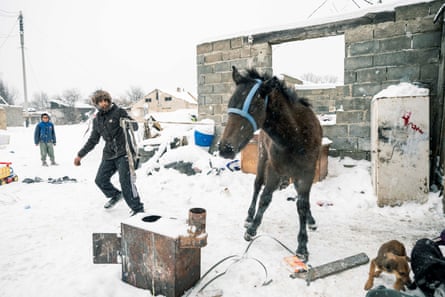
How many Roma are fighting in the Ukrainian army is even more difficult to guess. Horvat knows of about 500, but the number comes from 2024 and only covers those from his region. In the whole country, there could be thousands. Yet no such statistics are collected. “Ukraine doesn’t divide people along ethnicity lines,” he says.
The families of dead soldiers receive compensation of 15m Ukrainian hryvnia (about £250,000), with a fifth paid as a lump sum and the rest in monthly instalments over 40 months. Soldiers often write their last will, but Roma fighters rarely do. Their families are large and kinship ties are not always represented in documents. “Sadly, if Roma do have documents, they very often contain mistakes,” says Roman Bigunets, a Ukrainian lawyer.
Marianna Eötvös’s brother-in-law, Yevhen Varady, was killed by a suicide drone near Kramatorsk in Donetsk. She tells me this in her one-room house, her five children perched on a bed next to her. Varady was conscripted from prison. He was arrested for a minor offence and given a choice: army or a prison term, she says. He was 40. “They told us he’s dead, but his body has never been recovered,” she says.
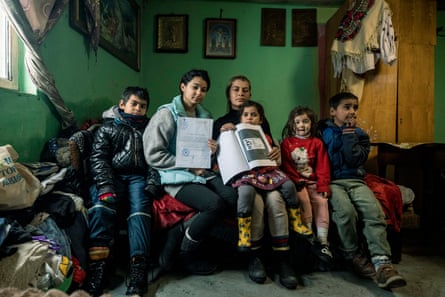
Her husband sought compensation for his brother’s death; he is a legal heir, but he did not get anything. The reason? In Varady’s ID the family name was misspelled as Varody. One small letter makes a big difference. “It’s shocking how often officials make mistakes in Roma documents,” says Bigunets. “It’s hard not to ask where this negligence is coming from.” Correcting these mistakes costs his legal NGO time and money, but the Roma pay a much higher price.
The biggest problem is with those who have gone missing in action, like 45-year-old Aleksander Pap, father of Jana Churay, 17. One day, he did not come home from work. He had been forcibly conscripted and taken from his job at the waste dump. Jana’s mother left the family long ago, so Jana became head of the household overnight. Jana shows her father’s photo on her phone. She has no idea how to look for him.
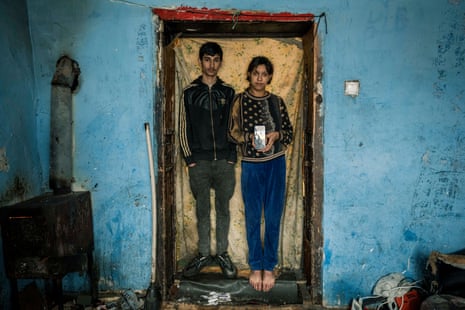
What is more, on paper, they are not related by blood. Pap was never named on her birth certificate. High unemployment rates mean many women hope to receive social benefits associated with being a single mother. Jana is expecting her third child with Tolik, her partner. For now, he is the main breadwinner. Soon he will turn 18 and then he could also be mobilised.
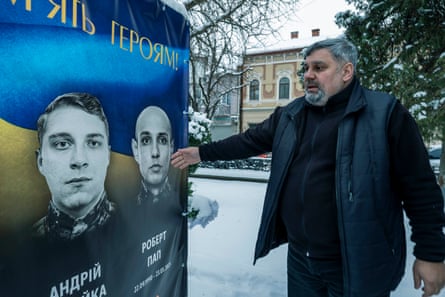
Along the snow-covered streets of Radvanka, some houses stand out. Ukrainian flags flutter over the rooftops. “Here live real patriots,” says Ilchak. In the evangelical congregation room, where Horvat is also a pastor, a Sunday service takes place. Next to the church lives Joseph Pap. His son, Robert, was conscripted from the street as he was out shopping. He was 34. Ten months later he was dead.
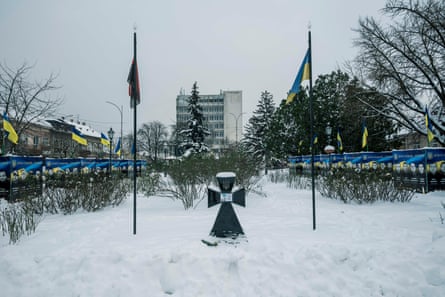
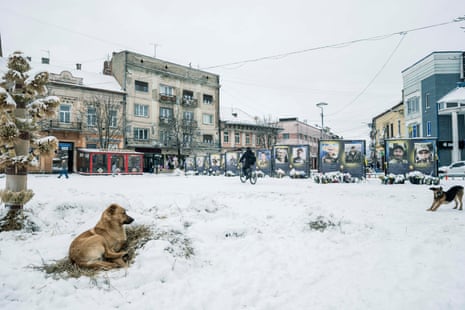
In April last year soldiers appeared at the door to deliver a death message. Robert’s sister spoke to them as her Ukrainian is the best. The rest of the family only really speak Hungarian – the Hungarian border is 20km away and many local Roma are Hungarian speakers. Horvat organised the funeral. The city put Robert’s portrait in the “Alley of Glory”, a gallery of photographs of fallen soldiers in the city centre.
Joseph receives compensation following his son’s death, 20,000 hryvnia a month. They don’t know why it is so little. “It took months to organise all the paperwork, even though the case was pretty straightforward,” says Ilchak, whose NGO can help.
“Many Roma can’t write, and don’t speak Ukrainian, but Hungarian or Romanes [Romani],” says Ilchak. “This is another obstacle for them in dealing with the Ukrainian state. City officials don’t like dealing with Roma. They always demand more documents, or say come tomorrow. At some point people simply give up.
“At the frontline it doesn’t matter one bit who is Roma and who is not.” But back in civilian life things are different. “My compatriots were initially surprised that illiterate Roma can join the ranks of the Ukrainian army. But in the face of death, we are equal. In the face of state institutions, we are not.”