Abu Yehya and his two sons awoke to the sound of bombing in the early hours of Monday morning. A dozen blasts, one just a few hundred metres away, sent them into the streets of Beirut’s southern suburbs.
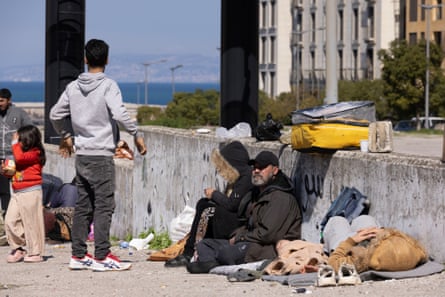
They walked for four hours, bleary-eyed, until they reached the same spot in downtown Beirut where they had fled during the last conflict, 18 months earlier, and curled up on the asphalt. There, they learned Hezbollah had struck Israel, and Lebanon was once again at war.
“The kids were terrified, they were screaming. It was exactly like the last time, we knew from the very first moment what it was. War is war,” said Abu Yehya, a 41-year-old day labourer, as he clutched his sons close to him.
He was one of tens of thousands of people who fled their homes in Lebanon on Monday as Israeli bombs pounded the country. Hezbollah had launched a volley of rockets at Israel in retaliation for the US-Israeli killing of the Iranian supreme leader, Ayatollah Ali Khamenei. Israel quickly responded, hitting the southern suburbs of Beirut, the Bekaa valley and south Lebanon.
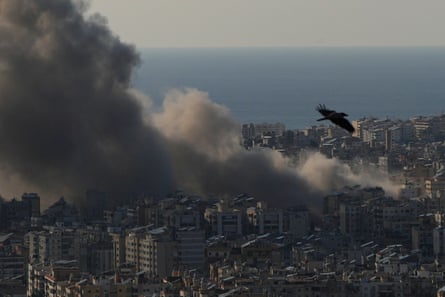
Israel’s overnight strikes were just the beginning. By the afternoon, the Israeli army had told residents of more than 50 villages in Lebanon to evacuate, and the sound of warplanes flying low over Beirut rattled windows. The head of Israel’s military, Lt Gen Eyal Zamir, said: “The IDF will not conclude the campaign before the threat from Lebanon is eliminated.”
By Monday evening, at least 52 people had been killed and 29,000 were displaced to emergency shelters, numbers that were expected to increase, the country’s ministry of social affairs said.
In Beirut, anger boiled over Hezbollah’s decision to enter the war with Israel, and drag the rest of the country with it.
“I was so, so upset when I learned we had entered the war. We are exhausted from all these wars,” Abu Yehya said. “Us adults, we will die when we die, but our children are a different story. They are frightened.”
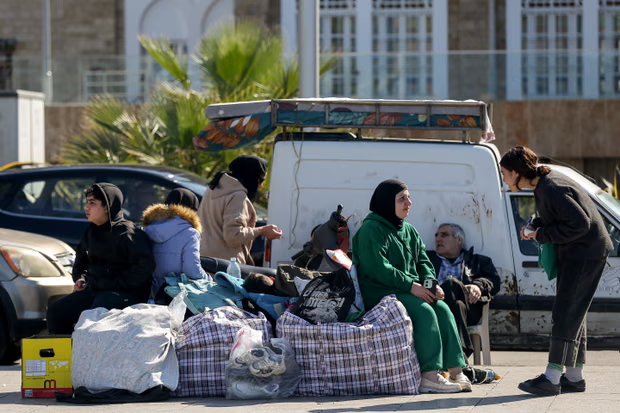
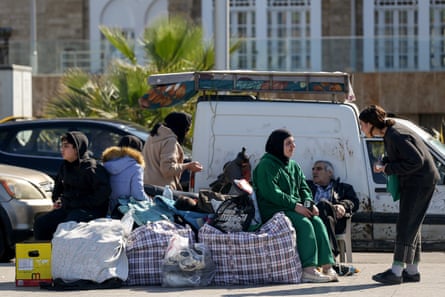
As he spoke from Martyrs’ Square in Beirut, families tried to sleep under the harsh morning sun, crowded together on thin foam mattresses. Passenger vans stuffed with blankets and suitcases clogged the streets, women with furrowed brows staring out at the city.
The scenes were eerily similar to 18 months earlier, when an Israeli campaign of bombing and the detonation of Hezbollah pagers sent people into the streets and overwhelmed hospitals. Then, the shock of the assault brought a sense of solidarity to the country: blood banks had lines out the door and health authorities had to issue a statement saying donations of vital organs, including eyes, were not medically possible.
This time, the assault was met with a sense of weary resignation and smouldering anger.
Even among the popular base of the group, the self-titled “community” of Hezbollah supporters, Hezbollah’s entry into the war provoked shock.
A woman from the Hezbollah-dominated southern suburbs of Beirut, who declined to give her name, said: “For two years Israel has been bombing Lebanon and Hezbollah has not replied even once. Now, Iran is bombed for two days and they burn the whole country for them? They don’t care about Lebanon.”
For weeks, Lebanese officials had passed warnings to Hezbollah that if it entered the war with Israel on the side of Iran, the entire country would suffer. Hezbollah, in turn, had reassured Lebanese officials that it would stand behind the state’s decision to stay out of the war.
The group’s decision to bomb Israel anyway created a deep sense of betrayal in the Lebanese government and particularly the Lebanese armed forces, both of which felt they were misled.
The Lebanese government quickly condemned the move, issuing a decision to ban Hezbollah from all security and military functions in the country, ordering the armed group to act as a political party only. The cabinet instructed the judiciary to arrest those who fired the rockets at Israel, and told the Lebanese army to prevent any more rockets from being launched from Lebanon at other countries.
The decision was unprecedented, as the Lebanese government had tried to avoid any confrontation with Hezbollah for the last 18 months, fearful of sparking civil conflict.
War came to Lebanon anyway.
People stopped on the streets of Beirut and craned their necks to the sky to try to spot the Israeli drone above, whose buzz – which had become a constant in the cityscape over the last two years – now felt deeply ominous. The rumble of fighter jets brought people running to their balconies as they waited for the booms of airstrikes which followed just a few seconds later.
In Martyrs’ Square, Abu Yehya was unsure what to do next. The shelters he visited were full, and his children were tired of sitting on the rough asphalt.
“We hear there is a park south of Beirut in Khaldeh, maybe we will head there. At least there will be shade,” he said.